Formulated specifically for urban micro-environments, rapid liquid encapsulation, zero dust tracking, and high-rise plumbing safety.
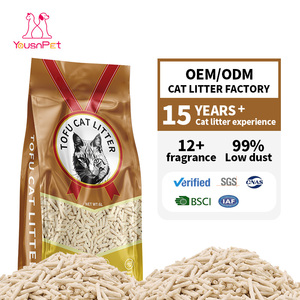
The pet care industry in South Korea—centered heavily around the Greater Seoul Metropolitan Area (encompassing Seoul, Incheon, and Gyeonggi Province)—has transitioned into a mature, premium-driven consumer ecosystem. With domestic cat ownership surging across urban demographics, Korean consumers (often self-identifying as "Butler" or 집사) demand cat litter formulations that far exceed standard global benchmarks. Sourcing directors, brand managers, and retail procurement teams looking for high-quality B2B manufacturing partners must navigate unique environmental, infrastructural, and regulatory factors native to Seoul's high-density housing landscape.
Unlike Western markets dominated by large single-family yards and spacious suburban homes, over 60% of Seoul households reside in multi-story apartment complexes (such as those in Gangnam, Songpa, Mapo, and Yeongdeungpo). This urban reality imposes three uncompromising functional criteria on cat litter: absolute dust suppression to protect indoor air quality and HVAC filtration systems, instantaneous ammonia encapsulation to prevent odor buildup in compact residential footprints, and eco-friendly waste disposal compatibility under South Korea's strict municipal garbage management systems.
Strategic Insight for Importers: Sourcing natural cat litters (such as plant-derived Tofu, high-starch Cassava, and pure white Calcium Bentonite) enables Korean brands to capture the lucrative "Eco-Humanization" pet market segment while offering consumer solutions tailored to Seoul apartment living.
Several market forces are shifting Korean consumer preferences away from low-cost, high-dust sodium bentonites toward engineered plant pellets and premium mineral formulations:
Our manufacturing facility operates vertical supply integration, operating proprietary mineral reserves and automated plant-fiber processing plants. To help Seoul procurement teams select the exact formulation for their target demographic, the technical performance profiles of our three core natural substrate lines are detailed below:
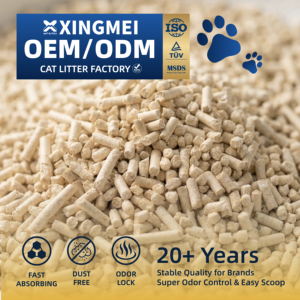
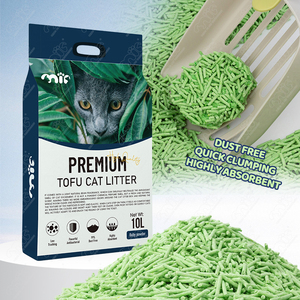
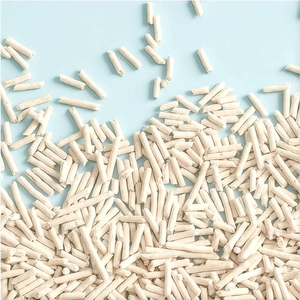
Manufactured from food-grade soybean curd residue (Okara) and natural pea fiber. Our 5-stage extrusion process yields micro-pellets with high mechanical hardness (reducing transport breakage to <0.5%).
Primary Benefit: Ultra-low tracking, instant gel-matrix formation, and 100% toilet flushability in standard residential plumbing systems.
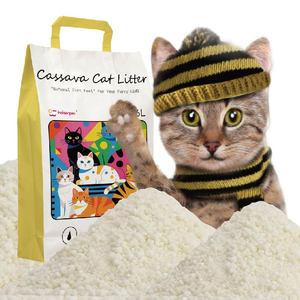
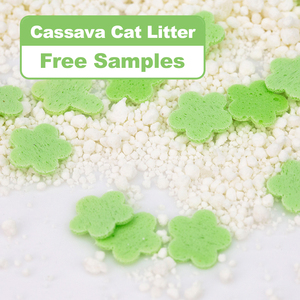
Utilizing high-amylopectin cassava starch derived from wild cassava roots. Granulated into fine micro-particles that mimic natural sand textures preferred by cats.
Primary Benefit: Rapid liquid absorption (up to 350%), bright cream-white aesthetic, and ultra-tight clumping that leaves zero crumble residue when scooped.
Directly mined from high-montmorillonite calcium bentonite deposits. Naturally bright white, naturally odor-absorbent, and free from artificial dyes or chemical washing.
Primary Benefit: Superior clump structural integrity, high thermal stability (ideal for heated Ondol floors), and exceptional cost-to-performance efficiency.
One of the largest consumer complaints in Seoul online reviews (Coupang, Naver Smart Store, Market Kurly) is airborne dust triggering respiratory issues in cats or creating white films on apartment furniture. Our production line incorporates an integrated 5-Stage Cyclone Negative-Pressure Air Filtration System. As pellets and granules move down the cooling and screening towers, high-velocity suction removes particles smaller than 200 mesh microns. This guarantees an industry-leading 99.5% dust-free metric upon bag vacuum packaging.
The following performance data reflects empirical testing under standardized lab conditions (25°C ambient temperature, 60% relative humidity, tested with synthetic feline urine solution):
| Parameter / Specification | 2.0mm Tofu Pellet | 1.5mm Tofu Micro-Pellet | Natural Cassava Sand | White Calcium Bentonite |
|---|---|---|---|---|
| Raw Substrate Origin | Pea Fiber & Soybean Okara | Pea Fiber & Food Starch | Natural Cassava Root Starch | Pure White Mineral Deposit |
| Liquid Absorption Ratio | 280% - 300% | 300% - 320% | 350% - 400% | 220% - 250% |
| Hydration & Clumping Time | 1.8 Seconds | 1.2 Seconds | 1.0 Second | 2.5 Seconds |
| Dust Free Index | 99.5% | 99.6% | 99.2% | 99.0% |
| Toilet Flushability Index | Excellent (Rapid Dissolve) | Excellent (Instant Breakdown) | High (Small Batch Flush) | Do Not Flush (Mineral) |
| Ondol Heat Resistance (Odor) | Very High (Porous Lock) | Very High (Porous Lock) | High (Starch Gel Lock) | High (Natural Adsorption) |
| Pallet Load Density (per 20'FCL) | approx. 11.5 Metric Tons | approx. 12.0 Metric Tons | approx. 14.0 Metric Tons | approx. 19.0 Metric Tons |
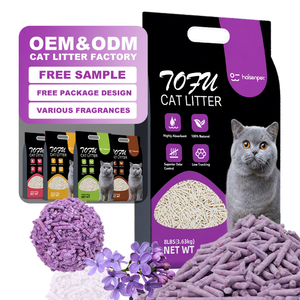
*All formulations can be customized with activated carbon particles, deodorizing micro-capsules, or natural scents (Green Tea, Baby Powder, Peach, Lavender, Unscented).
To successfully market cat litter products in Seoul, retail brands must align product characteristics with specific housing configurations and demographic lifestyle segments. Here are the three primary consumer profiles driving sales across the South Korean capital:
Living Context: Modern multi-room apartments featuring radiant floor heating (Ondol) and enclosed balcony utility rooms where litter trays are typically kept.
Recommended Solution: 1.5mm Tofu + Activated Carbon Hybrid Formulation. The ultra-small pellet diameter prevents tracking across hardwood floors, while activated carbon absorbs volatile organic compounds (VOCs) accelerated by floor heat.
Living Context: Single-person households ("One-Room" layouts) where the litter box sits in close proximity to sleeping and living areas.
Recommended Solution: Pure Cassava Sand or 2.0mm Fast-Clumping Tofu. Requires maximum instant odor absorption and immediate flushability so single pet owners can scoop and flush straight into residential toilets without storing waste indoors.
Living Context: Multi-cat households, cat cafes, and foster homes requiring high volume throughput, economic efficiency, and heavy litter tray rotation.
Recommended Solution: White Calcium Bentonite (1-3mm Mesh) or Bulk Container Supply. Delivers high scoopable strength, lower cost per kilogram, and long tray lifecycle between complete bed refreshes.
Cat litter shipments clearing South Korea Customs Service (KCS) through the Ports of Incheon or Busan require complete Material Safety Data Sheets (MSDS), non-toxic chemical declarations, and compliance with heavy metal safety standards (screening for Lead, Arsenic, Cadmium, and Mercury). Our factory provides full certified lab test reports alongside every export documentation container file to ensure frictionless customs clearance.
Yes. Our in-house design and packaging engineering teams produce fully customized retail packaging—including printed vacuum-sealed PE bags, side-handle bags, and eco-box formats. We format all artwork to comply with Korean Fair Trade Commission and pet product labeling guidelines, including Korean language product specifications, barcode integration (EAN-13/GS1), usage instructions, and batch manufacturing origin codes.
During the Korean summer monsoon season (Jangma), ambient humidity in Seoul can exceed 85%, which causes lower-grade plant litters to absorb atmospheric moisture, lose clumping strength, and mold. Our Tofu and Cassava formulations undergo controlled thermal drying during extrusion to maintain a low moisture equilibrium (<8%). Combined with vacuum package sealing, our litter remains shelf-stable for 24 months and retains high absorption performance even in humid environments.
For standard OEM production orders, manufacturing, custom bag printing, filling, and palletizing typically take 14 to 21 days. Ocean transit from our port facility to Incheon Port (the primary sea gateway for Greater Seoul) takes approximately 3 to 7 days depending on direct shipping lane schedules. We also support FCL (Full Container Load) and LCL consolidations.
We provide full sample suites containing our complete product array—including 1.5mm Tofu pellets, 2.0mm Tofu pellets, Cassava sand, and White Bentonite—shipped directly to your office or QA lab in Seoul via express air freight (DHL/FedEx). This enables your R&D team to verify clump hardness, dissolution speed, and dust metrics firsthand before committing to container production volumes.
Our standard OEM private label minimum order starts at one 20-foot container (approximately 11 to 14 metric tons depending on substrate selection). We offer flexible packaging plate fees and support multi-SKU container loading (e.g., combining Green Tea Tofu, Original Tofu, and Cassava in a single container) to help growing Korean brands diversify their product line efficiently.
As a vertically integrated enterprise, we bridge the gap between raw substrate mining/agriculture and high-end retail packaging. Our global manufacturing advantages include:
We operate our own calcium bentonite reserves and maintain direct contract farming for raw pea and cassava crops. This guarantees stable raw material pricing and 100% batch-to-batch consistency for your brand.
Equipped with modern automatic weighing, multi-stage dust extraction, and vacuum-sealing machinery capable of outputting over 80,000 retail-ready bags per day to meet major promotion spikes.
Every shipment is issued an internal Quality Assurance (QA) Certificate of Analysis covering moisture percentages, hardness indices, microbiological screening, and dust volume metrics.
Connect directly with our international export directorate to discuss custom formulations, private label artwork design, sample dispatch, and container pricing schedules.