1. Strategic Overview: Navigating the B2B Pet Hygiene Manufacturing Landscape
The global pet care market has undergone a paradigm shift, transitioning from basic functional hygiene to high-performance, eco-conscious, and human-grade pet wellness products. For procurement directors, brand managers, and supermarket chains, identifying a top trusted premium litter manufacturer is no longer merely a pricing exercise—it is a strategic decision encompassing raw material security, chemical safety, supply chain resilience, and precise custom manufacturing parameters.
As an industry-leading manufacturer operating state-of-the-art production hubs and vertically integrated raw material reserves (including pure white calcium bentonite mines in Fatsa, Ordu – Türkiye, alongside specialized plant-fiber extruders), our corporate infrastructure guarantees full product traceability from mine to pallet. We empower global brand partners through scalable OEM/ODM private label programs, enabling agile responses to shifting consumer demographics across Europe, North America, the Middle East, and the Asia-Pacific region.
Information Gain Insight: Modern pet owners evaluate litter performance based on three non-negotiable criteria: immediate clump shear strength (to prevent box crumbling), multi-stage odor encapsulation, and near-zero respiratory dust creation. Achieving these attributes at scale requires automated thermal drying and rotary cyclone de-dusting systems that standardized commodity processors cannot provide.
Vertical Integration: From Raw Reserve to Retail Shelf
Uncompromising quality control starts at the geological and agricultural source. Unlike secondary packaging facilities that rely on spot-market raw ingredients, our manufacturing operations are underpinned by direct mine ownership and long-term agricultural sourcing agreements for pea fiber, cassava starch, and natural corn derivatives:
- Geological Traceability: Our white calcium bentonite features high montmorillonite content (>85%), delivering exceptional natural cation exchange capacity (CEC) without heavy synthetic chemical additives.
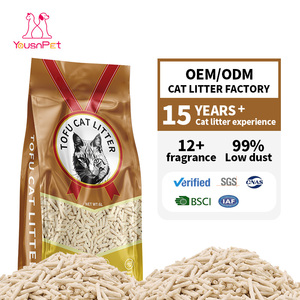
- High-Temperature Sterilization: Plant-based substrates (Tofu, Cassava, Corn) undergo 120°C high-pressure steam extrusion and flash drying to eliminate micro-flora, mold spores, and enzyme degraders, extending shelf stability under humid warehouse environments.
- Precision Sieving & De-dusting: Products undergo triple-pass mechanical screening to lock in specific granule distribution bands (e.g., 0.5–1.0mm micro-granules vs. 2.0mm low-tracking pellets), followed by negative-pressure dust extraction units achieving 99.5%+ dust-free purity.
Vertical Mine Control
Direct ownership of white bentonite deposits guarantees continuous color consistency, low iron contamination, and reliable bulk tonnage for high-volume contract orders.
Micro-Particle Tech
Advanced starch cross-linking and 2mm micro-pellet extrusion maximize surface-area-to-liquid contact, resulting in sub-3-second absorption and compact clumps.
Container Shipping Ops
Automated palletizing, stretch wrapping, and moisture-controlled container loading guarantee zero bag breakage or moisture damage during transoceanic transit.
2. Technical Material Benchmarking Matrix
To assist procurement managers in optimizing product lines according to channel economics (e.g., supermarket chains vs. boutique veterinary clinics), the table below details the performance metrics of our major OEM/ODM substrate platforms.
| Substrate Platform |
Granule / Pellet Size |
Absorbency Yield |
Clump Hydration Time |
Primary Target Channel |
Eco/Sustainability Rating |
| Natural White Calcium Bentonite |
0.5 – 3.0 mm mesh |
250% – 320% |
< 2.5 seconds |
Mass Retail & Supermarket Chains |
100% Mineral Natural |
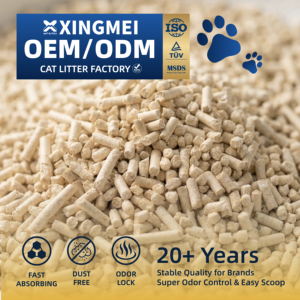
| Premium Pea Fiber Tofu Litter |
1.5 mm / 2.0 mm pellets |
350% – 420% |
< 1.8 seconds |
E-Commerce & Specialty Pet Stores |
100% Biodegradable & Flushable |
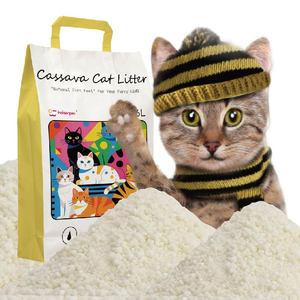
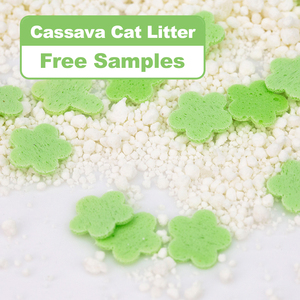
| Organic Cassava Starch Blend |
0.5 – 1.5 mm fine sand |
450% – 550% |
< 1.5 seconds |
Boutique Brands & Eco Specialty |
Rapid Renewable Agro-Resource |
| Corn-Sand Hybrid Granules |
1.0 – 2.5 mm granules |
300% – 380% |
< 2.0 seconds |
High-Rotation Commercial Outlets |
Compostable & Low Carbon Footprint |
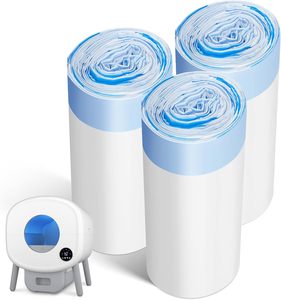
| Multi-Cat Heavy-Duty Liners |
Custom Micron Thickness |
Tear Shear > 45N |
N/A (Liner Barrier) |
Accessories & Bundle Retail |
Recyclable PE / Degraded Poly |
*Data compiled from standardized laboratory testing (ISO 9001 quality audits). Custom fragrance dosing (Baby Powder, Marseille Soap, Lavender, Green Tea, Activated Carbon) available upon technical review.
3. Global Cat Litter Procurement & Industry Development Trends (2025–2030)
B2B pet product sourcing is undergoing structural changes driven by environmental regulations, freight volatility, and evolving consumer preferences. Procurement teams must adapt to several overarching macro trends:
Trend 1: Accelerated Shift Toward Plant-Based & Flushable Substrates
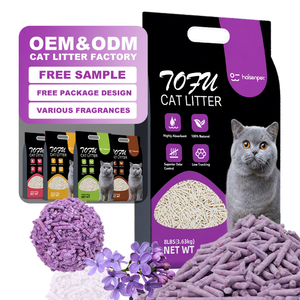
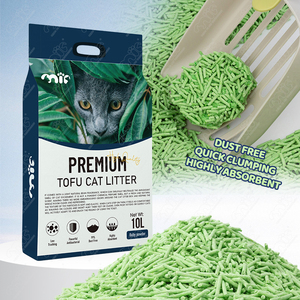
European and Asian markets are witnessing strong legislative and consumer pushback against non-biodegradable waste. Plant-derived litters—specifically food-grade Tofu (pea fiber) and concentrated Cassava starch—are capturing market share due to their flushable, municipal-compostable properties. Factories capable of manufacturing consistent 1.5mm to 2.0mm micro-pellets with instant solubility upon water immersion represent the fastest-growing sector in OEM contract manufacturing.
Trend 2: Micro-Granulation & Paw-Tactile Engineering
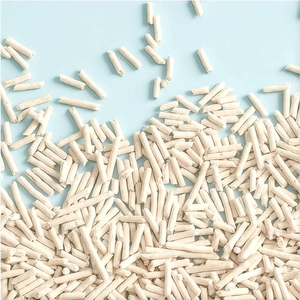
While traditional 3mm pellets served early market needs, modern feline behavioral science demonstrates a clear preference for soft, sand-like textures underfoot. Leading factories are shifting production toward micro-milled cassava sand and fine-grain 1.0mm tofu granules. These micro-formulations deliver superior clump tightness while maintaining gentle paw comfort for indoor urban cats.
Trend 3: Multi-Stage Odor Lock via Activated Carbon & Enzymes
Fragrance masking alone is no longer sufficient for high-density urban apartment living. Next-generation private label litter requires active odor neutralization. Leading factories are embedding porous micro-activated carbon matrices and natural enzymatic inhibitors directly into the substrate lattice during extrusion. This chemically traps volatile organic compounds (ammonia and trimethylamine) at the molecular level rather than merely covering them with perfumes.
Trend 4: Supply Chain De-risking & Packaging Optimization
Rising maritime container costs have elevated pallet volumetric efficiency into a major competitive factor. Modern manufacturing plants utilize vacuum-packed brick packaging for plant litters, reducing transportation volume by up to 30% per TEU container. Furthermore, global distributors are shifting toward vertically integrated manufacturers that hold dual-source raw material access to shield supply chains from trade disruptions.
4. Why Partner With Our Manufacturing Hub? Enterprise Advantages
Our organization provides a complete manufacturing solution designed to lower total cost of ownership (TCO) for global pet product importers and brand owners. Here is how our production infrastructure creates competitive differentiation for your business:
End-to-End Quality Management
Every production batch undergoes automated moisture testing, bulk density analysis, expansion ratio measurement, and dust particle counting prior to packaging approval. We issue Certificate of Analysis (CoA) documentation with every export shipment.
Full Private Label (OEM/ODM) Customization
From bag structural design (PE quad-seal, handle bags, rigid plastic buckets, bulk big-bags) to custom scent dosage and color pellet integration, our R&D engineers tailor finished products to match your exact brand identity and price targets.
Regulatory & Customs Compliance Document File
We streamline international customs clearance by providing comprehensive technical data sheets (TDS), Safety Data Sheets (MSDS), REACH verification, ISO 9001/14001 certificates, and phytosanitary declarations for plant-based shipments.
Flexible Logistics & Ocean Freight Strategy
Situated near major international deep-water ocean ports and land transportation corridors, we offer FOB, CIF, DDP, and consolidated container options (mixing bentonite, tofu, cassava, and liner accessories in a single shipping container).
5. Enterprise B2B Procurement FAQ (Frequently Asked Questions)
Direct responses to key technical, logistical, and commercial inquiries submitted by global buyers and brand procurement teams.
Q
What distinguishes natural white calcium bentonite from low-cost sodium bentonite for cat litter manufacturing?
Natural white calcium bentonite extracted from reserve deposits (such as our Fatsa facility in Türkiye) exhibits a high montmorillonite content with naturally clean aesthetic color and low iron levels. Unlike heavy sodium bentonite, calcium bentonite yields rapid liquid absorption and hard clumps that resist breaking during scooping, while leaving substantially less muddy floor tracking and grey dust residue. This visual cleanliness is strongly preferred by pet owners in premium retail channels.
Q
What Minimum Order Quantities (MOQs) apply to Private Label OEM/ODM orders?
Standard private label orders start at one 20-foot container (FCL), which typically holds 18 to 24 metric tons depending on packaging format (e.g., vacuum-packed 6L tofu bags vs. 10L bentonite sacks). For new brand introductions, we support mixed-item container loading, allowing buyers to combine different granule sizes, scents, or plant-based substrates within a single order shipment.
Q
How do plant-based litters (Tofu and Cassava) hold up during long-distance ocean shipping?
Plant-based litters are sensitive to humidity. To preserve product integrity, our plant products undergo high-temperature thermal sterilization and precision moisture reduction below 8–10%. Finished goods are sealed in heavy-duty vacuum bags or moisture-barrier PE films with secondary outer master cartons or pallet shrink wrapping. Container moisture-absorber packs are deployed to ensure long-term shelf stability in tropical or humid transit zones.
Q
Can your engineering team match existing brand fragrance profiles or granule colors?
Yes. Our laboratory provides custom fragrance encapsulation (such as Marseille Soap, Baby Powder, Lavender, Peach, or Green Tea) with controlled release technology that activates upon liquid contact. We can also integrate colored functional beads (blue/pink silica indicators or black activated carbon granules) to align with your brand visual identity.
Q
What quality certificates and compliance documentation do you provide for import customs clearance?
We provide a complete export documentation package with every shipment, including ISO 9001 (Quality Management System), ISO 14001 (Environmental Management), Safety Data Sheets (SDS/MSDS), Technical Data Sheets (TDS), Heavy Metal Test Reports, and Phytosanitary Certificates where required by regional border controls.