Explore our top-tier export configurations, ranging from sodium-activated calcium bentonite to advanced plant-clay hybrid matrices engineered for rapid clumping, zero tracking, and dust suppression.
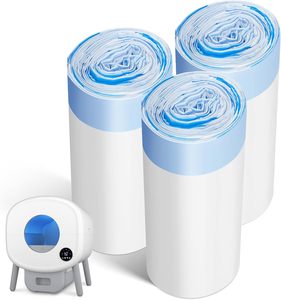
Heavy-duty poly-blend draw-string litter liners designed to handle dense bentonite clump loads without tearing. Fully customizable thickness and retail dimensions.
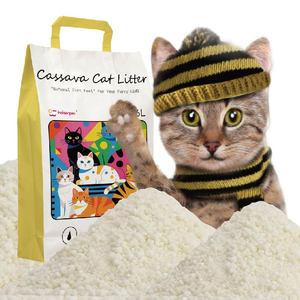
Ultra-absorbent starch-rich cassava micro-granules offering immediate fluid binding, pale visual hygiene, flushable breakdown, and lightweight transport logistics.
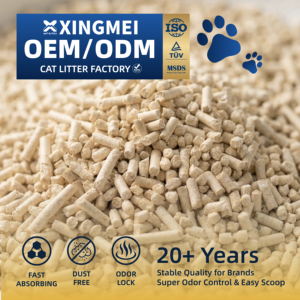
High-tensile pea fiber micro-pellets featuring 300% absorption rates, instant coagulation, and complete dust elimination for sensitive feline respiratory tracts.
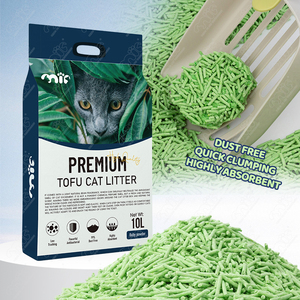
Optimized for high-volume retail chains; formulated with food-grade binding agents to deliver rock-hard scooping clumps and extended odor neutralization cycles.
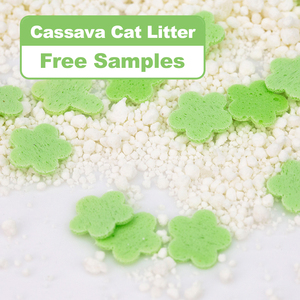
Custom branded cassava formulation engineered for premium retail channels. Exceptional liquid absorption ratio with natural organic odor encapsulation technology.
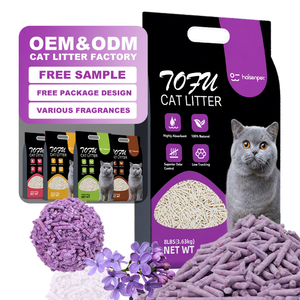
Rapidly dissolving bio-granules designed for municipal toilet disposal without plumbing clog risks, backed by strict microbial purity certifications.
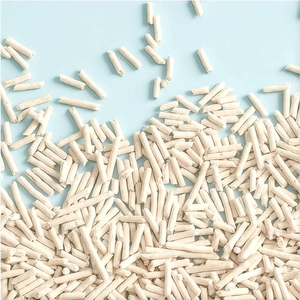
2.0mm ultra-fine extrusion profile providing pleasant paw feel, minimized tracking beyond the box, and refreshing corn-derived natural odor-masking scents.
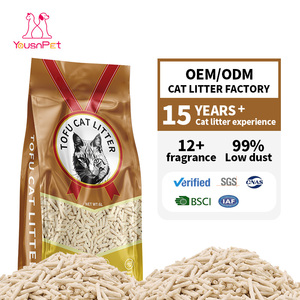
Engineered particle distribution balancing bentonite clay and plant fibers to optimize clumping speed while eliminating pet paw adherence and household tracking.
Bentonite is an expandable dioctahedral smectite clay composed primarily of montmorillonite, a 2:1 layer aluminosilicate mineral possessing a crystalline structure of an octahedral alumina sheet sandwiched between two tetrahedral silica sheets. The chemical performance, hydration kinetics, and cation exchange capacity (CEC) of processed bentonite are governed directly by the structural charge deficit originating from isomorphic substitution—specifically, the replacement of trivalent aluminum (Al³⁺) by divalent magnesium (Mg²⁺) in the octahedral layer.
When evaluated for commercial applications such as absorbent cat litter, industrial rheology modifiers, and civil engineering sealants, raw bentonite deposit deposits are categorized into two primary mineralogical end-members:
In high-grade bentonite pet litter formulations, immediate liquid encapsulation relies on capillary pore forces combined with interlayer swelling. As liquid enters the pore network, montmorillonite platelets delaminate, building a dense three-dimensional gel barrier that seals liquid within seconds. The physical strength of the resulting clump (measured by compression resistance in Newtons) depends directly on the concentration of active montmorillonite species (>80% target) and the particle size distribution (PSD).
Simultaneously, gaseous ammonia (NH₃) and hydrogen sulfide (H₂S) emitted from organic degradation are locked away via two distinct chemical mechanisms: physical adsorption within microporous clay channels and ionic exchange where basic ammonium ions (NH₄⁺) replace weak intercalated cations within the smectite structural layers.
For international buyers and procurement officers auditing China bentonite suppliers, understanding the technical boundary values across raw, processed, and plant-blended hybrid matrices is essential for margin optimization and quality assurance.
| Physical / Chemical Property | Sodium Activated Bentonite | High-Purity Natural Na-Clay | Plant-Bentonite Hybrid (Tofu/Corn) | Cassava Bio-Matrix |
|---|---|---|---|---|
| Montmorillonite Purity | 75% – 85% | > 88% | 20% – 35% (Clay phase) | 0% (Pure Starch) |
| Swelling Capacity (mL/2g) | 24 – 32 mL | 30 – 38 mL | 14 – 18 mL | 35 – 45 mL (Gel Expansion) |
| Water Absorption Rate (%) | 250% – 320% | 300% – 380% | 300% – 400% | 450% – 600% |
| Clump Cohesion Time | < 3 Seconds | < 2 Seconds | < 5 Seconds | < 2 Seconds |
| Bulk Density (g/cm³) | 0.85 – 0.95 | 0.88 – 0.98 | 0.45 – 0.55 | 0.38 – 0.48 |
| Dust Content (<100μm) | < 0.5% (De-dusted) | < 0.3% | < 0.1% | < 0.1% |
| Disposability / Flushability | Non-flushable (Landfill) | Non-flushable | Fully Flushable | Fully Flushable |
Note: Data compiled from standardized ISO 9001 quality audits and ASTM laboratory test protocols for industrial absorbent materials.
China's processing hubs—located predominantly in bentonite-rich geological belts across Inner Mongolia, Liaoning, Shandong, and Zhejiang—have undergone significant engineering upgrades to satisfy stringent European and North American environmental compliance requirements. Key processing advances include:
Traditional bentonite drying and crushing lines generated fine dust particles (<74 microns) that caused respiratory discomfort for pets and owners. Advanced Chinese exporters now employ 4-stage negative-pressure cyclone systems coupled with electrostatic dust precipitators. Granules undergo continuous tumbling in air-fluidized beds to strip loose powder, raising dust-free ratings above 99.7% prior to automated packaging.
Over-heating bentonite during moisture reduction can collapse the delicate interlayer crystal structure of montmorillonite, permanently damaging its swelling capacity. Modern processing plants utilize automated low-temperature (120°C–150°C) natural gas fluidized bed dryers. Moisture content is precisely stabilized between 6.0% and 8.0%, ensuring optimal shelf-life stability without triggering premature ambient hydration.
To capture growing market demand for light-weight and eco-friendly pet products, top exporters have pioneered hybrid manufacturing lines. By combining micro-ground bentonite clay powder with plant starches (pea starch, corn starch, cassava root flour), factories produce composite micro-pellets (1.5mm–2.0mm diameter). These pellets combine the structural rigidity and budget-efficiency of mineral bentonite with the lightweight, flushable characteristics of plant litter.
As international freight costs fluctuate and consumers increasingly prioritize sustainability without sacrificing performance, procurement strategies among major pet brand importers are shifting rapidly:
Navigating the Chinese manufacturing landscape requires rigorous supplier verification. A world-class processed bentonite exporter must demonstrate vertically integrated control from raw deposit extraction down to final container sealing.
Natural sodium bentonite is mined with inherent Na⁺ interlayer ions, delivering natural high swelling and clumping strength without chemical intervention. Sodium-activated calcium bentonite is produced by reacting calcium smectite clay with sodium carbonate (soda ash) under heat and shear. While activated bentonite achieves fast clumping, premium natural sodium bentonite maintains superior long-term clump integrity and lower breakdown rates during handling.
Standard 20-foot dry containers (20' GP) typically accommodate 24 to 25 Metric Tons of packed bentonite cat litter when palletized, or up to 26 Metric Tons when floor-loaded in heavy-duty poly bags. For plant-based hybrid litters (e.g., Tofu or Cassava), a 40-foot High Cube (40' HC) container holds approximately 18 to 22 Metric Tons due to their significantly lower bulk density.
Yes. Standard grain profiles include 0.5–1.5mm (micro-granules), 1.0–3.0mm (standard classic), and 2.0–4.0mm (coarse anti-tracking). Fragrances—such as lavender, baby powder, marseille soap, green tea, or activated carbon blends—are added via ultra-sonic liquid spraying systems during final screening to guarantee uniform aroma distribution without clumping the dry clay.
Initial OEM orders require 15 to 20 days for cylinder engraving and custom film printing. Once packaging artwork is approved and bags are fabricated, mineral processing, screening, scenting, and bag filling are completed within 7 to 10 days. Repeat orders generally dispatch within 10 to 14 days from order confirmation.
Comprehensive export documentation accompanies every shipment, including detailed Technical Data Sheets (TDS), Safety Data Sheets (SDS) compliant with GHS/REACH standards, Certificates of Analysis (COA), Heavy Metal Test Reports, and Official Phytosanitary/Fumigation Certificates where applicable.