
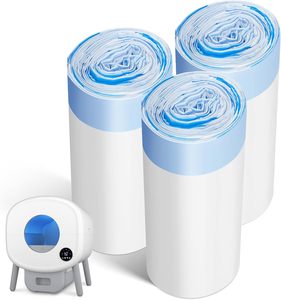
OEM Packaging Accessories
Explore our factory-direct bulk and retail-ready pet hygiene lines engineered for high absorption, rapid clumping, and 99.5% dust elimination.
The global pet care industry is undergoing a structural paradigm shift driven by feline urbanization, eco-conscious consumerism, and strict municipal waste policies. Traditional sodium bentonite clays and silica gel litters—long dominant in Western markets—are increasingly scrutinized for their mining carbon footprints, landfill permanence, and respirable crystalline silica (RCS) dust risks. In response, enterprise buyers, supermarket retail chains, and digital pet brands are actively pivoting toward custom OEM natural litter formulations derived from renewable plant starches, agricultural upcycling, and high-purity white calcium bentonite reserves.
As a leading vertically integrated contract manufacturer operating state-of-the-art processing plants in Fatsa, Ordu (Türkiye) alongside strategic East Asian plant-fiber pelletizing facilities, our facility engineers bespoke private-label solutions. We bridge the critical gap between raw agricultural material science and high-speed commercial retail distribution. This whitepaper serves as a definitive procurement blueprint for international buyers navigating the operational realities of sourcing high-performance, eco-friendly cat litters.
B2B procurement teams must look beyond initial FOB costs per metric ton. True supply chain profitability and brand equity depend on volumetric yield efficiencies, clump cohesion shear strength, and dust elimination metrics. Formulations that integrate high-purity cassava starches or white calcium bentonites achieve faster moisture encapsulation, allowing brands to downsize package volumes while matching consumer usage expectations.
Modern OEM natural litters are engineered across three core raw material vectors: plant-protein fibers (tofu/soybean), high-amylose starches (cassava/corn), and natural white calcium bentonite minerals. Each substrate possesses distinct chemical and mechanical behaviors during liquid exposure.
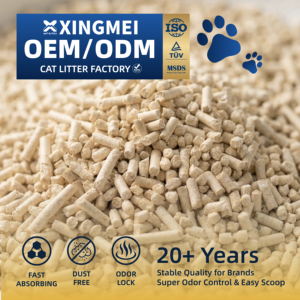
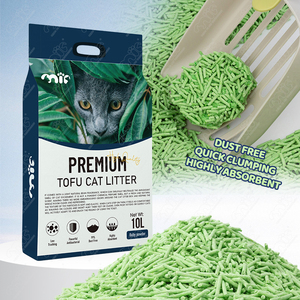
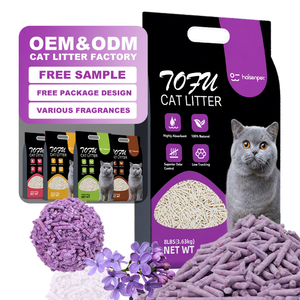
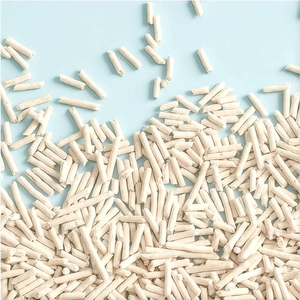
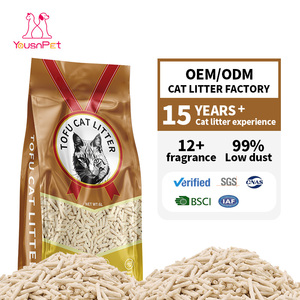
Utilizes food-grade pea or soybean curd residues. Extruded into 1.5mm–3.0mm micro-pellets. Offers instant capillary water draw, zero chemical additives, and complete municipal sewer flushability.
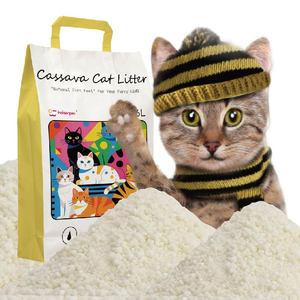
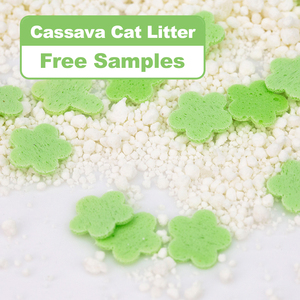
Derived from Manihot esculenta roots. Rich in natural amylopectin, creating glass-like, ultra-hard clumps within seconds of hydration. Exceptionally light color profile and virtually zero tracking.
Mined directly from pristine Fatsa, Türkiye deposits. Naturally white, low-iron montmorillonite clay that forms firm, non-crumbling clumps without needing artificial swelling agents or chemical dyes.
| Performance Metric | OEM Tofu Litter (Soy) | OEM Cassava Litter | White Calcium Bentonite | Corn Sand Granules |
|---|---|---|---|---|
| Hydration Pickup Speed | < 2.5 seconds | < 1.8 seconds | < 3.0 seconds | < 2.2 seconds |
| Absorption Yield ratio | 300% - 400% w/w | 350% - 450% w/w | 220% - 280% w/w | 280% - 320% w/w |
| Dust Ratio (<100μm) | < 0.2% (99.8% free) | < 0.3% (99.7% free) | < 0.5% (99.5% free) | < 0.4% (99.6% free) |
| Bulk Density (g/L) | 420 - 480 g/L | 380 - 430 g/L | 850 - 950 g/L | 500 - 550 g/L |
| Municipal Flushability | 100% Flushable (Disperses) | 100% Flushable (Disperses) | Non-Flushable (Clay Base) | 100% Flushable (Disperses) |
| Clump Shear Hardness | High (> 12 N) | Ultra-High (> 18 N) | High (> 15 N) | Medium-High (> 10 N) |
As retail channels become saturated with basic pet hygiene products, private-label brand owners must anticipate technical trends to secure competitive differentiation. Market data points to four dominant technological shifts:
To balance the low density and flushability of plant fibers with the economic efficiency and rapid surface drying of natural minerals, tier-1 manufacturers are developing composite hybrid litters. Combining 70% crushed tofu pellets with 30% fine-mesh Fatsa white calcium bentonite creates an optimized matrix that dramatically lowers retail unit costs while preserving superior odor lock and rapid clumping properties.
Simple masking perfumes (such as synthetic lavender or baby powder) are losing traction among modern consumers sensitive to artificial allergens. Future OEM specs incorporate micro-encapsulated natural enzymes and activated carbon micro-granules directly into the pellet matrix. These enzymes target urea breakdown at a molecular level, preventing ammonia gas emission ($NH_3$) for up to 30 days without off-gassing synthetic fragrance.
Standard 3.0mm tofu pellets, while effective, suffer from higher tracking rates as feline paws carry the larger cylinders out of the tray. Advanced OEM factories are upgrading die-plates to extrude 1.5mm–2.0mm micro-pellets. Micro-pellets deliver a paw-feel closer to natural sand, significantly increasing feline acceptance while reducing inter-pellet void space for tighter, flatter surface clumps.
Global retail compliance mandates are tightening around flexible plastic packaging. OEMs are phasing out unrecyclable PET/PE multi-layer laminates in favor of fully recyclable LDPE monomaterial bags. Furthermore, high-vacuum brick packaging for plant litters reduces shipping volume by 35% per 20' FCL container, directly cutting intermodal freight emissions and ocean freight costs per unit.
Sourcing from our contract manufacturing network provides global buyers with an unbroken chain of custody from quarry bench and raw farm harvesting down to the final stretch-wrapped pallet.
Our Fatsa, Ordu white bentonite reserve guarantees stable raw mineral supply with zero iron contamination risks, consistent white color purity, and full lot-by-lot technical traceability.
Our dual-cyclonic air-purification lines strip away microscopic airborne dust down to <100 microns, ensuring our 99.5% dust-free guarantee passes stringent international laboratory audits.
Direct proximity to Black Sea maritime shipping lanes and Asian deep-water ports allows flexible loading options in 20' FCL, 40' HQ containers, or 1,000kg industrial Big Bags for local re-baggers.
Fatsa calcium bentonite possesses a naturally bright white color, exceptionally low iron content, and high montmorillonite purity. Unlike sodium bentonite, which swells slowly and can form gummy sludge, calcium bentonite absorbs liquid instantly on contact to form hard, dry surface clumps. The pristine white color provides a visual cue of hygiene that premium retail consumers demand.
Yes. We offer full OEM formulation flexibility. Pellet diameters can be extruded at 1.5mm, 2.0mm, or 3.0mm. Scent profiles include unscented natural, green tea, baby powder, lavender, marseille soap, vanilla, peach, and activated carbon lock. Scent dosage and thermal stability are calibrated during initial sample trial runs.
For standard printed PE/OPP bags, our base MOQ is 1x20' FCL (approx. 14–18 Metric Tons depending on substrate bulk density). For custom-engineered brick vacuum packaging or specialized rigid bucket packaging, MOQs can be tailored based on bag printer plate agreements.
Absolutely. Our 100% plant-derived tofu and cassava litters are formulated from water-soluble starch and food-grade vegetable gum matrices. When immersed in high volumes of turbulent water (such as a toilet bowl), the clumps break down completely into soft plant fiber within 60–90 seconds, preventing plumbing blockages.
Every shipment is accompanied by a comprehensive Certificate of Analysis (COA), Technical Data Sheets (TDS), Material Safety Data Sheets (MSDS), Heavy Metal Analysis Reports, and SVHC (REACH) compliance test results required by European, North American, and Asian import authorities.
Moisture control is paramount. Our raw plant materials undergo high-temperature thermal sterilization and are dried to a strict residual moisture content below 8.0%. Combined with inner moisture-barrier bag liners and container-level desiccant bags, our products maintain a 24-month shelf life free from mold or fungal spores.