

Technical Innovations, Processing Engineering, and Sourcing Strategies for China Micro Granules Factories
The global pet hygiene and industrial absorbent landscape is undergoing a monumental paradigm shift. As international brand owners, retail chains, and enterprise importers re-evaluate their supply chains for 2025 and beyond, China best micro granules factories have emerged as the nexus of material science innovation, precision extrusion, and high-efficiency manufacturing. Traditional 2.0mm–4.0mm litter pellets and coarse bentonite minerals are rapidly being superseded by engineered micro-granules ranging from 0.5mm to 1.5mm in particle diameter. This technological transition is driven by consumer demand for instantaneous clumping, zero tracking, reduced dust emissions, and high-density volumetric efficiency.
This comprehensive technical whitepaper analyzes the engineering capabilities, material formulations, micro-sieve screening mechanics, and supply chain logistics that define leading micro granule factories in China. Whether sourcing premium plant-based micro-granules derived from pea fiber and cassava starch or refined white calcium bentonite micro-particles, understanding the technical metrics of pore density, shear strength, bio-enzymatic odor lock, and dust flotation is essential for modern procurement executives.
1. The Engineering Science of Micro-Granule Manufacturing
Micro-granules represent an advanced physical state of absorbent substrates. By manipulating the specific surface area per gram of raw material, Chinese manufacturers have achieved performance metrics that drastically exceed legacy pelletized formats. In micro-granule manufacturing, the ratio of exposed surface area to volumetric mass increases exponentially, accelerating capillary liquid pickup and forming ultra-tight, hyper-consolidated clumps upon liquid contact.
Micro Mesh Calibration (0.5 – 1.5mm)
Utilizing high-precision multi-deck vibration sieves, raw substrates are calibrated into tight mesh distributions. Micro-granules provide smooth paw comfort while eliminating inter-particle voids, ensuring liquids cannot pool at the bottom of trays.
Triple Air Flotation De-Dusting
Leading factories incorporate negative-pressure multi-stage cyclone air separators. Dust and micro-airborne particles are vacuumed out during screening, resulting in a certified dust-free rate exceeding 99.9%.
Instantaneous Capillary Clumping
Micro-granules leverage dense micro-pore structures. Upon exposure to moisture, liquid is absorbed within 1.5 seconds, locking hydration into a solid disc that resists shear breakage during scooping.
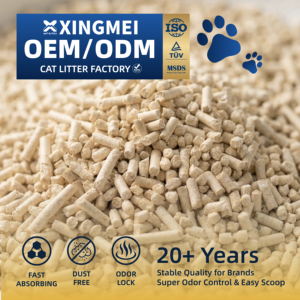
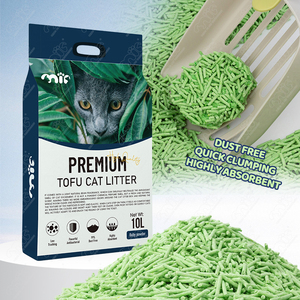
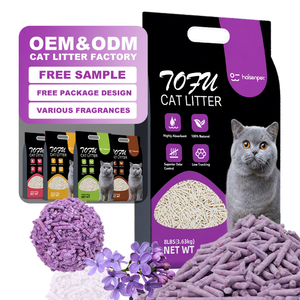
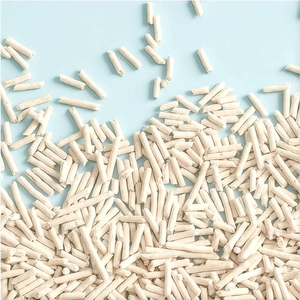
The manufacturing process begins with raw material refining. For plant-based micro-granules (such as cassava and tofu formulations), food-grade pea fiber, corn starch, and natural guar gum are blended in high-shear planetary mixers. The homogenized compound undergoes low-temperature twin-screw extrusion through specialized micro-perforated dies. The extruded micro-strands are cut by high-speed rotary blades into sub-millimeter granules before entering fluidized-bed dryers where moisture content is precisely stabilized between 6% and 8%.
For mineral micro-granules, premium calcium bentonite ore mined from high-purity deposits undergoes natural solar drying, sodium activation, and ultra-fine disk crushing. The resulting granules are subjected to thermal treating and multi-grade mesh screening to isolate uniform micro-particle fractions, producing a clean, bright-white aesthetic preferred by global consumer brands.
2. B2B Technical Product Matrix & Specification Comparison
Selecting the optimal micro-granule substrate requires comparing material characteristics against retail market requirements, target pricing, and environmental compliance standards. The matrix below outlines technical benchmarks across the primary micro-granule product categories produced by top China factories:
| Substrate Category | Granule Mesh Size | Water Absorption Ratio | Clump Shear Hardness | Bulk Density (g/L) | Flushability & Eco Status |
|---|---|---|---|---|---|
| Micro Tofu Granules (Crushed) | 0.8 mm – 1.8 mm | 350% – 420% | > 950g force | 480 – 520 g/L | 100% Flushable / Biodegradable |
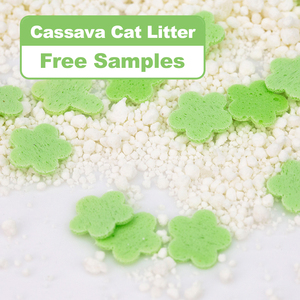
| Natural Cassava Micro Sand | 0.5 mm – 1.2 mm | 400% – 480% | > 1100g force | 550 – 600 g/L | 100% Rapid Dissolve / Eco-Safe |
| White Calcium Bentonite Micro | 0.5 mm – 2.0 mm | 300% – 360% | > 900g force | 850 – 920 g/L | Non-flushable / 100% Natural Ore |
| Hybrid Cassava-Tofu Micro Blend | 0.8 mm – 1.5 mm | 380% – 450% | > 1050g force | 500 – 540 g/L | 100% Bio-based / Flushable |
| Ultra-Fine Corn Sand Pellet | 1.0 mm – 2.0 mm | 320% – 380% | > 850g force | 510 – 550 g/L | Fully Flushable / Agricultural Byproduct |
Factory Insight: Micro-granules deliver significant freight cost reductions for global B2B buyers. Due to their optimized particle packing density, a 40-foot High Cube (40 HQ) container can accommodate up to 20% more net functional absorbency compared to traditional 3mm extruded pellets, directly lowering per-ton sea transport costs.
3. Global Sourcing Trends & Procurement Forecast (2025–2030)
As international environmental regulations tighten and ocean logistics costs fluctuate, enterprise procurement teams are modernizing their supply chain criteria. Sourcing micro-granules from China involves understanding key macro trends that shape the global pet hygiene and industrial absorbent sectors:
A. Transition from Clay Minerals to Renewable Plant Fibers
While bentonite remains a staple in regional markets due to cost efficiency, major markets in Europe, North America, and East Asia are pivoting toward plant-derived micro-granules (cassava, pea fiber, corn starch, tofu byproducts). Chinese factories are located at the center of agricultural supply chains, granting immediate access to high-purity plant proteins and starches. Procurement strategies increasingly prioritize non-GMO, sustainably harvested plant fibers that decompose naturally in municipal composting systems.
B. Automated Private Label Packaging Integration
Modern B2B importers no longer purchase unbranded bulk bags alone; they require shelf-ready, fully customized packaging solutions direct from the OEM plant. Top Chinese micro granule factories have integrated fully automated vertical form-fill-seal (VFFS) packaging lines capable of producing nitrogen-flushed vacuum sealed bricks, quad-seal gusseted PE/PET pouches, paper boxes, and heavy-duty handle bags. Automated robotic palletization ensures zero carton collapse during long-distance ocean voyages.
C. Stringent Chemical Compliance & VOC Verification
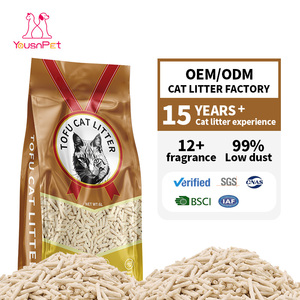
Regulatory authorities in Western markets require rigorous safety documentation for pet contact materials. Premium Chinese micro granule factories maintain compliance with EU REACH regulations, SVHC (Substances of Very High Concern) screening, heavy metal toxicity tests (EN 71-3), and formaldehyde-free certifications verified by third-party testing agencies like SGS, TÜV Rheinland, and Intertek.
4. Product Innovation Trends: What Distinguishes Top China Factories
In a competitive manufacturing landscape, top-tier factories differentiate themselves through proprietary chemical formulations and processing patents. Key technological innovations currently coming out of leading Chinese facilities include:
- Bio-Enzymatic Odor Retainability Matrix: Impregnating micro-granules with natural plant enzymes and activated carbon micro-particles that chemically neutralize ammonia ($NH_3$) and hydrogen sulfide ($H_2S$) molecules at the molecular level, rather than masking scents with heavy synthetic perfumes.
- Color-Changing Indicator Micro-Spheres: Integrating bio-safe pH-sensitive indicator granules within micro-litter formulations to alert pet owners to early urinary track anomalies by altering color when coming into contact with abnormal urine alkalinity or acidity.
- Hydrophilic Core with Low-Tracking Surface Finish: Engineering micro-granules with a smooth, anti-static outer surface that prevents particles from clinging to pet fur, while retaining an ultra-porous hydrophilic inner core for fast moisture uptake.
5. Enterprise Procurement FAQ: Sourcing from China Micro Granules Factories
What is the minimum order quantity (MOQ) for custom private label micro granule production? +
How do cassava micro-granules compare to tofu micro-granules in performance and pricing? +
What quality assurance steps are taken to guarantee 99.9% dust-free standards? +
Can we request customized scents, colors, or bio-active additives? +
What are the standard lead times for manufacturing and FOB shipment clearance? +
Are plant-based micro-granules safe for home flushing and municipal drainage systems? +
6. Corporate Superiority & Manufacturing Ecosystem
Partnering with an established manufacturing enterprise ensures supply chain continuity, batch consistency, and price stability. Our production complex in China operates under strict ISO 9001:2015 Quality Management Systems and ISO 14001:2015 Environmental Management Standards. By integrating raw material sourcing, automated processing, technical R&D, and direct port logistics, we provide enterprise clients with an uncompromised competitive advantage.
Vertically Integrated Raw Supply
Direct ownership of bentonite mining concessions and long-term joint venture agreements with premier pea-protein starch mills guarantee unfluctuating material quality and cost resistance against market spikes.
R&D Lab & Formula Customization
In-house laboratories equipped with laser particle size analyzers, moisture titration equipment, shearing stress meters, and gas chromatography odor testing allow us to engineer bespoke formulations tailored precisely to buyer standards.
Turnkey Export & Multilingual Support
Our dedicated B2B international trade desk manages every step of the export journey—from packaging design localization and barcode registration to customs clearance and ocean container booking.
Whether you are looking to launch an innovative private label micro-granule product line, optimize existing product manufacturing costs, or establish a reliable bulk supply partner in China, our team delivers the technical expertise, production scale, and quality assurance your business requires.