
Direct factory supply featuring 99.5% dust-free processing, rapid clumping kinetics, and sustainable plant and mineral substrates for global distributors and brand owners.
The global pet care ecosystem has undergone a structural paradigm shift over the past decade. No longer viewed strictly as utilitarian home supplies, pet litter products are now evaluated under stringent consumer metrics including indoor air quality impact, biosecurity, environmental footprint, and domestic hygiene convenience. For international buyers searching for China Best Litter Trade Manufacturers & Manufacturer options, navigating this evolving market requires an authoritative understanding of substrate chemistry, manufacturing processing lines, OEM/ODM customization capabilities, and global trade compliance.
China's manufacturing infrastructure for pet litter leads the world in material diversity, technological scaling, and cost efficiency. From advanced plant-fiber extrusion facilities producing zero-dust Tofu and Cassava litters to vertically integrated mineral processing operations extracting high-montmorillonite calcium and sodium bentonite, Chinese factories provide the global backbone for private-label brands, retail chains, and wholesale distributors across North America, Europe, the Middle East, and Southeast Asia.
Core Procurement Takeaway: Modern sourcing success depends on evaluating factory-level dust extraction capabilities, clumping speed kinetics (<3 seconds), bulk density customization, and container freight efficiency rather than unit price alone.
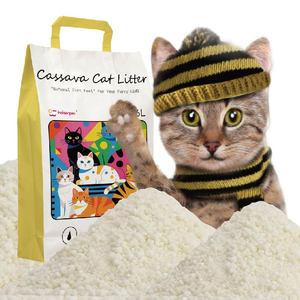
While mineral-based litters (bentonite, clay, silica gel) historically commanded over 80% of global volume, eco-conscious consumers are driving massive compound annual growth rates (CAGR > 12.4%) for plant-based, biodegradable alternatives. Tofu (soybean pea fiber), Cassava (tapioca starch), and Corn Sand formulations are rapidly taking shelf space in tier-one supermarkets and specialized pet outlets due to their flushability, lightweight shipping profiles, and non-toxic safety profiles for feline health.
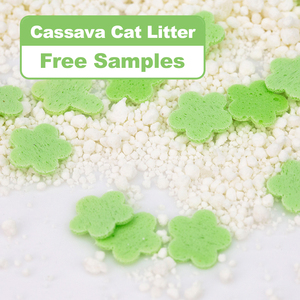
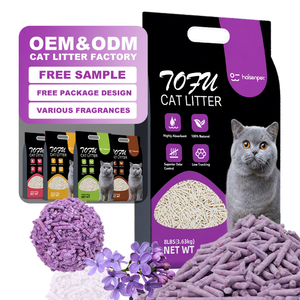
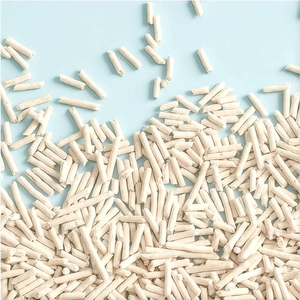
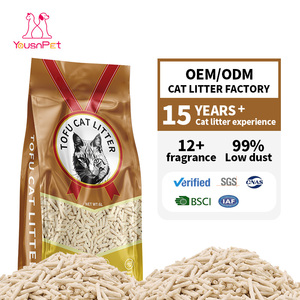
To maximize ROI and consumer satisfaction, commercial procurement managers must select product matrices aligned with target demographic preferences. Below is a detailed technical analysis of our core export portfolio showcased above:
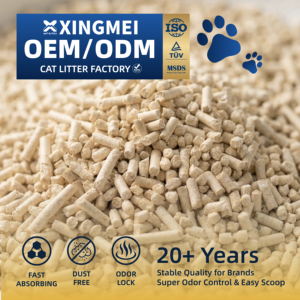
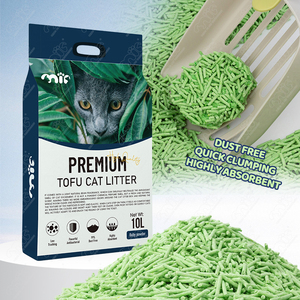
Our botanical production lines utilize human-grade pea fiber, edible corn starch, and industrial tapioca starch bound through high-pressure thermal gelation. Key export variations include:
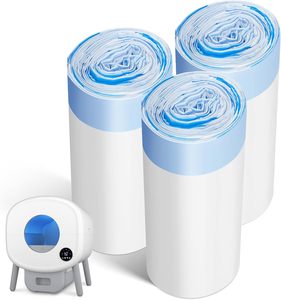
Hygiene extends beyond the litter medium itself. Our heavy-duty Litter Liner Bags engineered from multi-layer polyethylene (LDPE/HDPE) offer high tear strength, scratch resistance, and custom drawstring closures. Supply chain partners stocking liners alongside clumping litters consistently experience higher basket values and enhanced brand loyalty.
Comparing technical parameters across substrates empowers sourcing teams to build multi-tier product lineups tailored for value, mid-market, and ultra-premium brand segments.
| Substrate Type | Clumping Speed | Absorption Ratio | Dust Level | Flushability | Bulk Density | Target Retail Segment |
|---|---|---|---|---|---|---|
| Tofu (Pea Fiber 2.0mm) | < 3 Seconds | 300% - 350% | < 0.5% (99.5% Free) | 100% Flushable | 520 - 550 g/L | Mid-to-High Tier Eco / Urban |
| Cassava (Pure Starch) | < 2 Seconds | 350% - 400% | < 0.8% (99.2% Free) | 100% Flushable | 600 - 650 g/L | Ultra-Premium Natural |
| White Calcium Bentonite | < 5 Seconds | 220% - 280% | < 0.5% (Triple Screened) | Non-Flushable | 880 - 950 g/L | Mass Market / Traditional |
| Corn Sand Blend | < 4 Seconds | 280% - 320% | < 1.0% | 100% Flushable | 500 - 530 g/L | Value Eco / Supermarket Chains |
Understanding long-term industry trajectories allows importers to lock in competitive advantages prior to wider market adoption. The leading manufacturers in China are focusing engineering efforts on four strategic technology pillars:
Respiratory sensitivity in indoor cats and human owners has elevated "Dust-Free" claims to top purchasing criteria. Advanced production facilities now implement 4 to 6 inline cyclone dust separators combined with electrostatic air-wash chambers during the final packaging loop. This process lowers particulate matter (PM2.5 and PM10) to sub-0.5% levels, eliminating airborne clouds during litter box refilling.
Relying solely on heavy synthetic fragrances to mask odor is obsolete. Modern buyers demand odor-neutralizing formulations. Next-generation plant litters integrate bio-enzymatic agents that actively decompose ammonia molecules (NH3) and hydrogen sulfide (H2S) at the molecular level, alongside micro-porous activated carbon granules for long-lasting odor containment.
Maritime logistics expenses require maximum payload utilization per container. Vacuum brick packaging for Tofu and Cassava litter reduces package volume by up to 30% compared to loose bags, preventing product degradation during shipping and doubling retail shelf layout density.
European and North American regulatory bodies are steadily introducing strict Life Cycle Assessment (LCA) requirements for imported pet products. Utilizing agricultural byproducts (pea dregs, tapioca residues) converted via solar-assisted industrial drying yards positions Chinese plant-based manufacturers as low-carbon footprint leaders.
Our manufacturing ecosystem operates on a foundation of absolute transparency, strict batch reproducibility, and end-to-end quality assurance. From raw material sourcing to container seal verification, we guarantee consistent excellence for global private label partners.
Essential technical and commercial answers compiled by our international export directors to streamline your B2B sourcing process:
Our standard MOQ for customized private label packaging bags (gravure or digital printing) starts at 5,000 to 10,000 units per bag design depending on volume capacity (e.g., 5L, 6L, 10L, 5kg). For initial market test orders using generic or unprinted master bags with customized sticker labels, we offer flexible starter orders of 1 x 20-foot container (approx. 12 to 14 metric tons for Tofu litter; up to 24 metric tons for Bentonite).
Both Tofu (pea fiber) and Cassava litters dissolve rapidly when submerged in large volumes of water. Unlike bentonite or silica clay which expand and clog piping, botanical fibers break down into non-sticky organic slurry within seconds, making them 100% septic-safe and flushable under standard municipal sanitation guidelines.
We employ a proprietary multi-tier dust removal system consisting of primary vibration screening, secondary cyclone air-washing, and electrostatic dust suction immediately prior to bag filling. Furthermore, our plant formulations utilize food-grade binders that prevent granule breakdown during ocean transit vibratory conditions.
We provide extensive customization: Pellet diameters for Tofu litter can be extruded to 1.5mm, 2.0mm, or 3.0mm. Scent profiles include Unscented, Green Tea, Lavender, Peach, Baby Powder, Coffee, Vanilla, and Activated Carbon Odor-Lock. Natural plant pigments can be added to match brand color schemes upon request.
Each shipment includes a complete documentation binder: Bill of Lading (B/L), Commercial Invoice, Packing List, Technical Data Sheet (TDS), Material Safety Data Sheet (MSDS), Heavy Metal Analysis Certificate, Non-Regulated Goods Certificate, and Phytosanitary Certificates where applicable.
For repeat orders, standard production lead time is 10 to 15 business days from order confirmation. First-time private label orders requiring custom cylinders or bag printing typically require 20 to 25 days to complete bag fabrication and artwork proofing prior to filling.
Expand your product catalog with high-margin, low-dust, fast-clumping cat litters engineered for global retail success. Request custom samples, factory pricing, and OEM design consultation today.