Export Portfolio
Flagship Industrial & Commercial Bentonite Grades
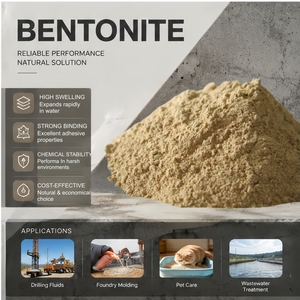
Engineered from premium natural montmorillonite deposits, rigorously tested for API Spec 13A drilling standards, high-temperature foundry casting, pet care, and specialized chemical applications.
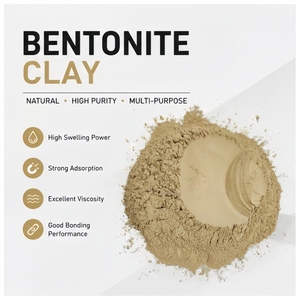
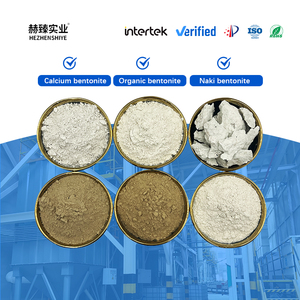
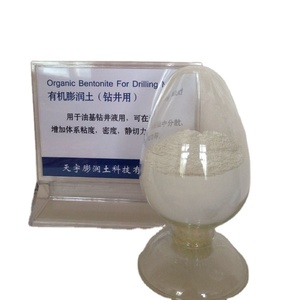
Factory Supply High Purity Bentonite Powder, Heat & Acid Resistant Bentonite For Drilling, Casting And Ceramic Production
Montmorillonite: >85%
Applications: Drilling, Casting, Ceramics
Thermal Stability: High Thermal Resistance
Inquire Now
Natural Montmorillonite Bentonite Powder Multi-Functional Thickener For Construction, Agriculture And Paint Formulations
Function: Rheology & Thixotropic Control
Particle Size: 200 - 1250 Mesh
Grade: Industrial / Agricultural
Inquire Now
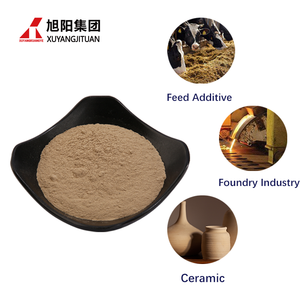
Bentonite Powder Oil Refinery/Feed Use White/Yellow Color 100-1250 Mesh Particle Size 25kg/bag Package
Purity: Feed / Refining Grade
Mesh Size: 100 - 1250 Mesh
Packaging: 25kg PP/PE Bag or Bulk
Inquire Now
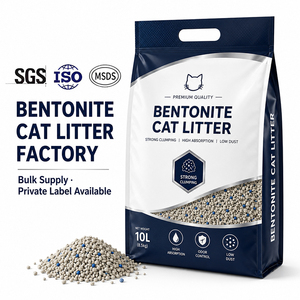
Natural Calcium Bentonite Round Granule Sand Clumping Deodorizing Wholesale Bulk Export Bentonite Cat Litter
Granule Mesh: 0.5 - 3.0mm Sphere
Dust Level: 99.5% Dust Free
Feature: Rapid Hard Clumping
Inquire Now
Wholesale Natural Bentonite Sodium Bentonite 25kg Bag for Drilling Fluids Drilling Mud
Standard: API Spec 13A Compliant
Viscosity: High Yield & Fluid Loss Control
Package: 25kg / 1000kg Jumbo Bag
Inquire Now
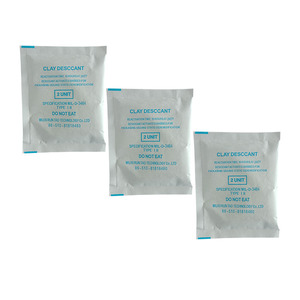
2U Montmorillonite Clay Hygroscopic Desiccant With Bentonite Particles CRESS Brand CAS 112926-00-8 99% Purity
CAS No: 112926-00-8
Standard: MIL-D-3464E / DIN 55473
Moisture Abs: High Capacity Desiccant
Inquire Now
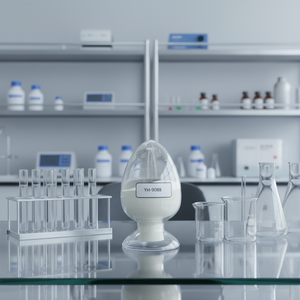
Yuhong YH-ED Bentonite Clay Exporter & Supplier with 85% Montmorillonite Content >70 Whiteness pH 9-12
Whiteness: >70% Bright White
pH Value: 9.0 - 12.0 (Alkali Activated)
Purity: 85% Montmorillonite
Inquire Now
High Purity Sodium Bentonite Powder For Drilling Fluid And Civil Engineering Applications Bentonite
Swelling Capacity: >30 ml/2g
Yield Index: High Barrel Per Ton
Application: Diaphragm Walls & GCL
Inquire Now
>85%
Montmorillonite Purity
500k MT
Annual Refining Capacity
>70
Whiteness Rating Index
65+
Global Export Markets
Industry Whitepaper
Strategic Sourcing Guide: Evaluating Chinese Bentonite Exporters & High-Purity Clay Chemistry
Bentonite clay—primarily composed of smectite group minerals, specifically sodium and calcium montmorillonite—serves as an irreplaceable functional material across oilfield drilling, foundry metallurgy, civil engineering waterproofing, industrial coating rheology, edible oil purification, and eco-friendly pet care. As global procurement teams re-evaluate supply chain resilience and cost-to-performance metrics, China has established itself as the world's premier processing hub for high-grade, alkali-activated, and modified organic bentonites.
This technical whitepaper outlines the essential parameters required to audit Chinese bentonite manufacturers, detailing crystal lattice thermodynamics, cation exchange dynamics, rheological performance, and future market shifts driving global B2B procurement through 2035.
1. Mineralogical Fundamentals & Crystallographic Quality Metrics
The operational performance of bentonite powder is governed entirely by its 2:1 layer-lattice crystallographic structure. A single sheet of montmorillonite consists of an octahedrally coordinated aluminum oxide sheet sandwiched between two tetrahedrally coordinated silicon oxide sheets. The specific sub-surface mineralogy determines key behavioral attributes:
- Montmorillonite Content (>85% Threshold): High-grade export bentonites undergo X-ray diffraction (XRD) and methylene blue adsorption testing to verify montmorillonite content exceeding 85%. Lower purity clays containing quartz, feldspar, or gypsum impurities demonstrate inferior gel strength, higher abrasiveness in pumping equipment, and diminished fluid-loss control.
- Sodium vs. Calcium Exchange Thermodynamics: Natural sodium bentonites possess hydrated Na+ cations in the interlayer space, conferring rapid hydration, high swelling volumes (>30 mL/2g), and strong thixotropic gel structures. Conversely, natural calcium bentonites display lower swelling indices (6-10 mL/2g). Premier Chinese processing factories utilize controlled soda-ash (Na₂CO₃) activation under precise thermo-mechanical shear to convert natural calcium bentonite into sodium-activated industrial powders meeting API Spec 13A requirements.
- Cation Exchange Capacity (CEC): High-performing industrial clays maintain a CEC benchmark of 80 to 110 meq/100g, enabling maximum ion retention, organophilic surfactant modification, and superior binding strength in green sand casting molds.
2. Advanced Processing & Quality Control Protocols
Leading Chinese exporters maintain vertically integrated operations—from bench mining reserve management to multi-stage drying, ultra-fine micronization, and dust suppression. Processing efficiency hinges on three technological pillars:
First, fluid-bed flash drying ensures moisture levels are reduced to an optimal 6%–10% window without triggering lattice collapse or thermal degradation of hydration channels. Second, air-classifier pulverizers allow customizable particle size distributions (PSD), yielding fine powders ranging from 100 mesh (industrial binders) down to 1250 mesh (high-clarity paints and liquid rheology modifiers). Third, automated de-dusting during granulation ensures cat litter products hit 99.5% dust-free guarantees, satisfying stringent EU and North American retail audits.
Competitive Superiority
Why International Procurement Teams Partner With Us
Delivering complete quality assurance, end-to-end supply chain transparency, and custom particle engineering tailored to your industry's exact specifications.
Vertically Integrated Mine Reserves
Direct ownership of high-grade calcium and sodium bentonite mining reserves ensures absolute raw material consistency, single-origin traceability, and uninterrupted long-term supply volume commitments.
API & ISO Certification Benchmarks
Every export batch undergoes rigorous quality control testing in certified laboratories, guaranteeing compliance with API Spec 13A drilling mud standards, ASTM D5890 swelling specs, and ISO 9001/14001 audits.
Custom Granulometry & Activation
From 0.5–3.0mm round clumping granules for retail pet litter to 1250-mesh micronized powders with specialized pH (9-12) adjustment, we engineer physical properties to meet precise client application needs.
OEM / ODM Private Label Excellence
Full-spectrum contract manufacturing services including multi-layer printed PE packaging, handle bags, box/bucket filling, barcode assignment, custom scenting, and palletized stretch-wrapping.
Decarbonized Eco-Processing
Utilization of high-efficiency gas-fired thermal drying, closed-loop dust collection, and localized port logistics near major export harbors to reduce scope 1 and 2 procurement carbon footprints.
Optimized Total Cost of Ownership
High loading densities (25–28 tons per 20' container), volume-tiered factory-direct pricing, and flexible payment terms engineered to maximize profit margins for global distributors.
Technical Benchmarks
Industrial Grade Technical Comparison Matrix
Comparative physical and chemical properties of China's primary export bentonite categories.
| Bentonite Category |
Primary Application |
Montmorillonite % |
Swelling Index |
pH Range |
Viscosity (Fann 600) |
| API Sodium Bentonite |
Oilfield & Geothermal Drilling Mud |
>88% |
>32 mL / 2g |
9.5 – 11.5 |
>30 cPs |
| Foundry Casting Bentonite |
Green Sand Molding Binders |
>85% |
24 – 28 mL / 2g |
9.0 – 10.5 |
N/A (Green Comp: >90kPa) |
| White Calcium Bentonite |
Pet Care & Clumping Cat Litter |
>82% |
12 – 18 mL / 2g |
7.5 – 9.0 |
Instant Clumping Strength |
| Organophilic Bentonite |
Paints, Coatings, Lubricants |
>92% |
Solvent Gelation |
Neutral |
High Thixotropic Yield Value |
| Desiccant Clay (CAS 112926-00-8) |
Hygroscopic Moisture Packs |
>90% |
Adsorption >20% RH |
6.5 – 8.0 |
Static Adsorption Index |
Market Intelligence
Future Procurement Trends & Technology Roadmap (2026–2035)
The global bentonite market is experiencing a structural pivot driven by heightened environmental regulations, automated industrial processes, and demands for higher material performance. Sourcing managers must align their supply chain strategies with four mega-trends reshaping bentonite manufacturing in China:
1. Shift Toward Eco-Friendly, Bio-Compatible Drilling Additives
As offshore and deep geothermal drilling operations face stringent environmental discharge standards (such as OSPAR guidelines in Europe and revised EPA standards in North America), traditional synthetic polymer muds are increasingly restricted. China's top bentonite exporters are developing non-toxic, thermally stable organoclay complexes that provide extreme temperature resistance (>200°C) while maintaining micro-biodegradability in aquatic environments.
2. Rise of Micro-Granulation & Ultra-Low Dust Pet Care Formulations
Consumer preferences in the multi-billion-dollar global pet care segment have shifted sharply toward health-conscious, dust-free litter products. China's export factories are upgrading from standard crushed granules to engineered micro-spherical calcium bentonites. Combined with natural activated carbon and organic enzymatic odor-locking agents, these products establish new retail performance standards for rapid liquid absorption and zero tracking.
3. High-Purification Organoclays for Advanced Coatings & Nanocomposites
The rapidly growing automotive, aerospace, and green building coatings sectors require rheology modifiers capable of delivering anti-settling, sag control, and crisp shear-thinning characteristics. Modern Chinese factories are investing in quaternary ammonium cation modification processes to yield ultra-clear organoclays that disperse effortlessly in lower-VOC solvent systems.
4. Supply Chain Decarbonization & Freight Density Optimization
With ocean freight volatility and global carbon accounting (CBAM), top-tier Chinese exporters are focusing heavily on logistics engineering. By adopting high-density vacuum packing for fine powders and compact automated palletization for retail bags, exporters maximize container space utilization—achieving up to 28 metric tons per 20-foot FCL—effectively cutting transport carbon emissions and landed freight costs per ton.
Procurement Knowledgebase
Frequently Asked Sourcing Questions
Expert technical answers addressing common questions from international buyers, quality auditors, and supply chain managers.
Q
What distinguishes natural sodium bentonite from soda-ash activated sodium bentonite?
Natural sodium bentonite possesses native Na+ exchange ions within its crystal lattice, offering high thermal stability during repeated hydration-drying cycles. Soda-ash activated bentonite is produced by chemically treating natural calcium bentonite with sodium carbonate (Na₂CO₃) during extrusion. Activated bentonite achieves excellent swelling volumes, high API fluid-loss control, and strong initial thixotropy at a significantly lower raw material cost, making it ideal for standard civil engineering and drilling applications.
Q
How do Chinese exporters verify compliance with API Spec 13A for oilfield muds?
Rigorous factory testing is conducted using standardized Fann Model 35 viscometers, API low-pressure filter presses, and wet sieve analysis apparatus. Key parameters verified include Viscometer Reading at 600 RPM (≥30), Yield Point/Plastic Viscosity Ratio (≤3), Filtrate Volume (≤12.5 mL), and Residue on 75-micron (200 mesh) sieve (≤4.0%). Certificate of Analysis (COA) documentation accompanies every export container shipment.
Q
What are the standard lead times, minimum order quantities (MOQ), and packaging options?
Standard industrial powder orders carry a baseline MOQ of one 20-foot container (~24 to 28 MT depending on port limits). Lead time for standard powders is 7–10 days from order confirmation. For customized OEM private label pet care packaging (custom artwork PE bags or plastic buckets), initial tooling and print approval require 2 weeks, with production run fulfillment following in 10–14 days. Packaging options range from 5L/10L retail bags to 25kg PP multi-wall bags and 1,000kg ton big bags.
Q
Why is white calcium bentonite preferred over grey sodium clay for cat litter applications?
White calcium bentonite from high-grade deposits features a naturally bright, clean color with low iron content, creating strong consumer associations with hygiene. Calcium bentonite absorbs liquids extremely rapidly forming tight, firm clumps that do not break apart when scooped. Furthermore, its lower native dust index and neutral scent retention profile make it ideal for adding high-end botanical scents or activated carbon odor absorbers.
Q
Can your technical team formulate specialized bentonite for custom industrial rheology needs?
Yes. Our R&D engineering lab features advanced ultrasonic dispersion, laser particle size analyzers, and high-temperature rheometers. We routinely partner with global manufacturers to adjust moisture parameters, particle size distributions (PSD down to 1250 mesh), pH ranges (9–12), and surface ion modification to match specific binder, ceramic glaze, or paint formulations.
Request Custom Quotations & Technical Sample Kits
Connect directly with our senior geological and export engineering team to receive detailed COAs, technical data sheets, factory audit documentation, or custom lab samples.