Factory-direct wholesale cat litter formulations, engineered liner systems, and high-performance carbon-infused private label products ready for global export.
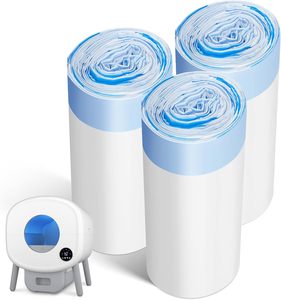
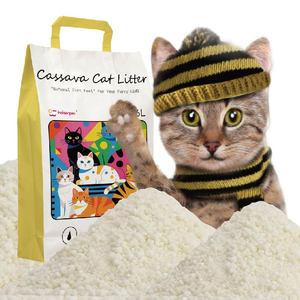
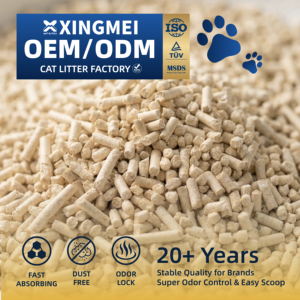
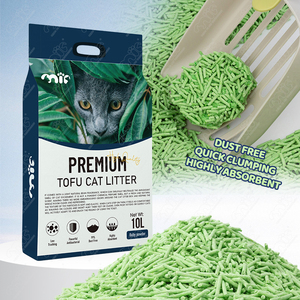
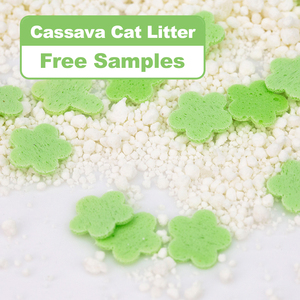
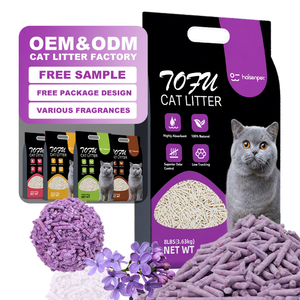
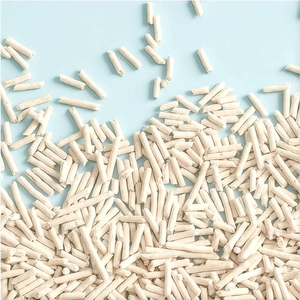
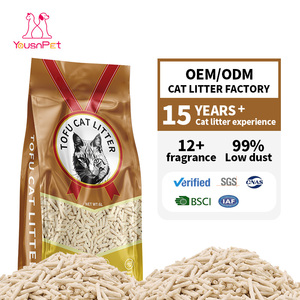
In the evolving global pet care sector, procurement directors and commercial buyers face growing pressure to ensure that imported litter products meet stringent European health, safety, and environmental standards. The designation "CE Certified Carbon Litter Factories & Factory" represents far more than a standard compliance stamp; it certifies that the manufacturing infrastructure adheres to strict European Union directives regarding non-toxicity, chemical stability, volatile organic compound (VOC) emissions, and material safety under normal pet usage conditions.
Modern carbon-infused cat litters—whether based on high-purity mineral matrices such as Turkish calcium bentonite or plant-derived hydrocolloids like cassava starch and pea fiber (tofu)—utilize physical steam-activated carbon particles embedded directly within the granule core. Under CE compliance criteria and REACH (Registration, Evaluation, Authorisation and Restriction of Chemicals) regulations, manufacturers must prove that the activation processes are free from heavy metal contamination (such as arsenic, lead, or cadmium) and that zero synthetic chemical binders migrate into the domestic environment during use.
Furthermore, certified manufacturing plants integrate sophisticated quality management protocols aligned with ISO 9001:2015 and ISO 14001:2015. Vertically integrated facilities—operating their own raw material reserves (such as calcium bentonite mines in Fatsa, Ordu – Türkiye) alongside automated carbon-dosing processing lines—provide absolute batch-to-batch consistency. This vertical integration allows buyers to verify supply chain origin, physical sieve distribution, clump breaking force (N), and precise moisture content profiles before export.
Traditional cat litters rely solely on physical liquid absorption to trap odors. However, feline urine contains high concentrations of urea ($CH_4N_2O$), which rapidly breaks down into volatile ammonia gas ($NH_3$) and alkylamines through microbial enzymatic degradation (urease catalyst). Standard clay or plant fibers quickly become saturated, releasing pungent odors back into indoor spaces within 24 to 48 hours.
To solve this fundamental chemical challenge, high-capacity CE certified carbon litter factories implement multi-stage thermal activation technology. Coconut shell carbon or high-purity bituminous coal carbon is subjected to high-temperature steam activation ($800^\circ\text{C} - 1000^\circ\text{C}$), generating an expansive internal network of micro-pores (diameters $< 2\text{ nm}$) and meso-pores ($2\text{ nm} - 50\text{ nm}$). This internal architecture expands the effective surface area of the active carbon to over 1,000 square meters per gram.
Van der Waals forces physically trap gaseous molecules ($NH_3, H_2S$) inside the sub-nanometer carbon pores, locking volatile organic compounds permanently into the mineral/plant lattice without requiring chemical fragrance cover-ups.
Oxygenated functional groups (carboxyl, phenolic, carbonyl) on the surface of thermally treated carbon act as weak acidic active sites, neutralizing alkaline ammonia vapors into non-volatile ammonium complexes.
When combined with the natural high montmorillonite content ($>85\%$) of premium white calcium bentonite or the gelating amylase matrix of cassava starch, the resulting hybrid carbon litter delivers a dual-action mechanism: instantaneous liquid entrapment followed by continuous 30-day gas-phase VOC sequestration.
For international buyers, supermarket sourcing directors, and private label brand owners, selecting the appropriate substrate requires evaluating technical performance parameters against target retail positioning:
| Technical Parameter | Carbon Calcium Bentonite | Carbon Cassava Litter | Carbon Tofu Litter (Pea Fiber) |
|---|---|---|---|
| Raw Substrate Origin | Natural Calcium Bentonite (Fatsa, Ordu) | 100% Biodegradable Cassava Starch | Food-Grade Pea Fiber & Starch |
| Bulk Density (g/L) | 800 – 900 g/L | 400 – 500 g/L | 450 – 550 g/L |
| Liquid Absorption Ratio | 300% – 350% by weight | 450% – 500% by weight | 350% – 400% by weight |
| Clumping Speed & Hardness | Instant (< 3s), Hard Solid Clump | Ultra-Fast (< 1.5s), High Shear Strength | Fast (< 2.5s), Cohesive Pellets |
| Ammonia Reduction Rate (24h) | 98.7% (Impregnated Carbon) | 99.2% (Micro-pore Matrix) | 96.5% (Enzymatic + Carbon) |
| De-dusting Level | 99.5% Dust-Free (Cyclonic Sieve) | 99.8% Dust-Free | 99.0% Dust-Free (2mm Pellets) |
| Disposal & Flushability | Landfill / Non-flushable | 100% Flushable & Biodegradable | 100% Flushable & Compostable |
| Target Retail Segment | High-Rotation Supermarket & Mass Retail | Premium Eco-Specialty & Vet Clinics | Urban Multi-Cat Households & E-commerce |
A true commercial advantage in the global pet supply market requires vertical supply chain control. Our manufacturing operations combine direct mine ownership with state-of-the-art automated processing and packaging facilities. Operating from Fatsa, Ordu – Türkiye, our calcium bentonite mining reserves deliver raw minerals characterized by exceptional white color uniformity, low iron oxide content ($< 1.2\%$), and superior montmorillonite purity.
Our industrial production lines are built to accommodate diverse global procurement models, spanning bulk raw material export to full turn-key retail brand creation:
As international pet care markets mature, corporate buyers must anticipate structural shifts in consumer behavior, regulatory frameworks, and supply chain dynamics over the next five to ten years:
1. Rise of Carbon-Enhanced Plant Hybrids: While bentonite remains the dominant global volume leader due to its affordability and hard clumping action, urban apartment living has accelerated the adoption of plant-based litters (cassava and tofu). The key growth driver in 2025–2030 is the integration of activated carbon into cassava and corn substrates, eliminating the primary weakness of natural plant litters—their tendency to sour quickly in high-humidity environments.
2. Decarbonization & EU CBAM Compliance: European importers will increasingly need to audit the carbon footprint of ocean freight and manufacturing energy consumption under the Carbon Border Adjustment Mechanism (CBAM) and EU Corporate Sustainability Due Diligence Directive (CSDDD). Factories utilizing clean thermal drying (such as natural gas or solar pre-drying yards) and localized European/Black Sea shipping routes will hold a decisive cost and compliance advantage over long-haul East Asian suppliers.
3. Monomaterial & Circular Packaging Protocols: Regulatory mandates in Germany, France, and the UK are phasing out non-recyclable multi-layer foil bags. Sourcing strategies are rapidly pivoting toward mono-material Polyethylene (PE) bags incorporating post-consumer recycled (PCR) resin content (20% to 50%) without compromising drop-test durability or moisture-barrier performance.
4. Ultra-Low Dust Health Standards: Feline asthma and human indoor air quality concerns are driving demand for dust levels below 0.5%. Certified factories are investing in multi-stage dual-cyclonic air classification and anti-static mineral oil atomization during the final packaging phase to virtually eliminate airborne micro-particles.
Partner directly with an enterprise-grade CE certified carbon litter manufacturer. Contact our international export engineering department today for product technical data sheets (TDS), analysis reports, and custom OEM packaging quotes.