Kurtuluş, Sami Yücel Cd. No:44/2, Fatsa / Ordu – Türkiye +90 (452) 716 52 52 [email protected]
0%

Choosing the right mineral for international supply requires more than a bright appearance. Calcium White Bentonite Clay attracts global buyers because it combines a clean visual profile with useful adsorption, suspension, and rheological properties. Its performance can support applications such as drilling fluids, construction materials, absorbent products, and selected industrial formulations. However, suitability depends on the grade, processing method, and final use.

In practical sourcing, buyers should request a recent certificate of analysis, safety data sheet, technical data sheet, and representative sample. Important checks include calcium content, montmorillonite percentage, moisture, particle size, pH, swelling capacity, viscosity, and whiteness. A pale powder may look consistent, yet its behavior can change after hydration. Small laboratory trials often reveal more than photographs or broad supplier claims.

Reliable suppliers should explain the mining origin, processing controls, packaging options, and batch traceability. They should also communicate realistic lead times and shipping conditions. Moisture-resistant bags matter when containers cross humid routes. A damaged pallet can affect product quality before production begins.

Global sourcing also requires attention to destination-country requirements, labeling rules, documentation, and permitted applications. Specifications should be matched to local regulations, not copied from another market. Some buyers may prefer higher brightness, while others value swelling performance or lower cost. There is no universal best grade.

Calcium White Bentonite Clay can be a practical sourcing choice, but it deserves careful verification. Even experienced buyers can overlook variability between batches. A transparent supplier, clear testing plan, and modest trial order reduce that risk. The strongest decision is not always the cheapest one.
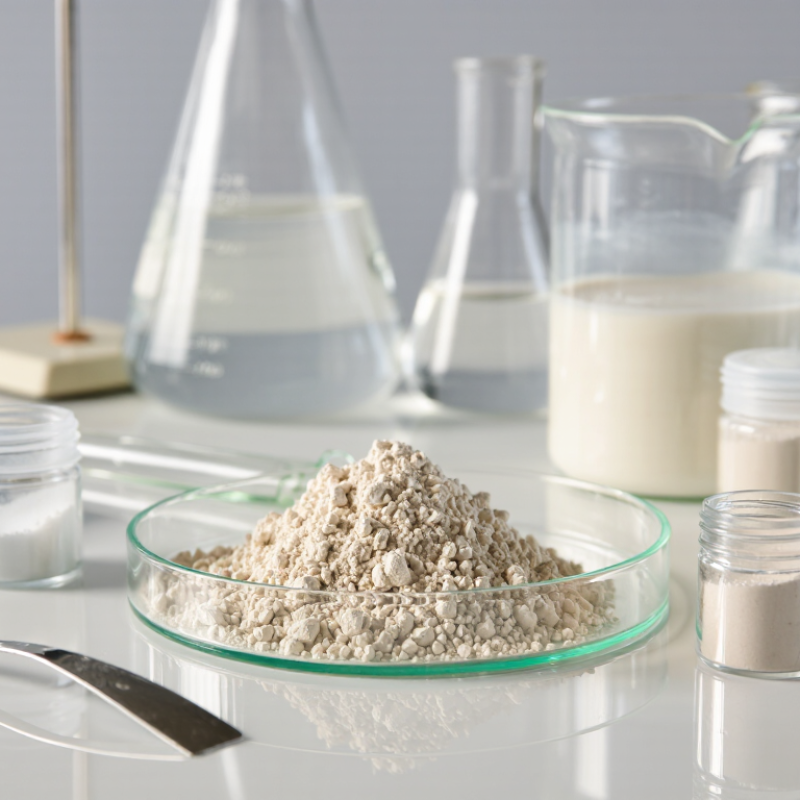
Why Choose Calcium White Bentonite Clay for Global Sourcing?

Mineral Identity: Calcium Bentonite and Its Montmorillonite Structure

Calcium white bentonite is identified by its mineral composition, not by its color alone. In global sourcing, that distinction matters. White material may still contain quartz, feldspar, iron oxides, or other natural impurities. Calcium bentonite typically contains calcium as the dominant exchangeable cation. Its performance depends on geology, processing, moisture, and particle size.

At the mineral level, calcium bentonite is rich in montmorillonite, a layered clay mineral within the smectite group. Each particle resembles a stack of extremely thin sheets. Water enters the spaces between these sheets and causes controlled expansion. Calcium ions help moderate that swelling, often producing a firmer, less expansive gel than sodium-dominant bentonite. Montmorillonite also provides cation exchange capacity, which supports adsorption and moisture retention. The structure is more important than the label.

A reliable supplier should provide recent X-ray diffraction results, chemical analysis, moisture data, and particle-size information. I would also request cation exchange capacity and swelling measurements from representative lots. Color can look impressive under bright warehouse lighting. It proves very little. A practical test should examine dispersion in water, sediment behavior, odor, and consistency after drying. Results may differ between deposits, even within one region. That variability deserves attention. I would not treat a single laboratory report as permanent evidence, because quarry faces change and processing conditions sometimes drift. Supplier documentation is useful, but independent verification remains wiser for long-term sourcing.

Calcium bentonite is primarily composed of montmorillonite, a swelling 2:1 layered smectite clay mineral. Quartz, feldspar, calcite, and other accessory minerals may occur in smaller amounts. The values shown are representative proportions for mineralogical comparison; actual composition varies by deposit, geology, and processing.

Market Scale: USGS 2024 Reports U.S. Bentonite Output Near 4 Mt

Why Choose Calcium White Bentonite Clay for Global Sourcing?

The USGS 2024 Mineral Commodity Summaries reports U.S. bentonite output near 4 million metric tons. This scale signals mature mining, processing, and bulk logistics capacity. It also supports steadier supply planning for international buyers. However, total output does not prove that every deposit provides white calcium bentonite. Grade matters more than volume.

Calcium white bentonite is valued for its light color, gentle swelling behavior, and mineral functionality. Applications may include cosmetics, drilling fluids, absorbent products, and industrial formulations. Experienced buyers should request a recent certificate of analysis. Key checks include montmorillonite content, moisture, particle size, pH, whiteness, and heavy-metal limits. Test a production sample, not only a showroom sample. Small differences can affect dispersion and final texture.

Tips: Compare three batches before signing a long-term contract. Ask for mine origin, processing details, packaging weight, and export records. Confirm whether “white” describes natural color or post-processing. A high national production figure can create false confidence. I would still inspect consistency, because calcium content and swelling performance may vary between deposits. Also, freight distance can quietly outweigh a low ex-works price. Keep a retained sample for every shipment. That habit is simple, but often missed.

Performance Benchmark: Typical CEC Ranges from 60–150 meq/100 g

Why Choose Calcium White Bentonite Clay for Global Sourcing?

Calcium white bentonite clay is often selected for its clean appearance, workable texture, and balanced swelling behavior. Its cation exchange capacity, or CEC, commonly falls between 60 and 150 meq/100 g. This range is broad. It reflects differences in mineral composition, deposit location, processing, and test methods.

A higher CEC may indicate more active exchange sites for calcium, magnesium, ammonium, and other cations. That can support adsorption, moisture management, and formulation stability. However, CEC alone does not predict performance. A clay with 120 meq/100 g may behave differently from another clay with the same result. Particle size, pH, moisture, purity, and dispersion speed also matter.

A single number can mislead.

Experienced buyers should request recent laboratory reports, test methods, moisture data, particle-size distribution, and batch references. Comparing samples under identical conditions is more dependable than reviewing a sales sheet. During evaluation, observe slurry viscosity, settling, color consistency, and water demand. Small differences become visible after mixing.

Global sourcing adds practical concerns. Packaging must protect the powder from humidity during storage and transit. Suppliers should explain sampling procedures and provide traceable lot information. I would not approve a large shipment from one small sample alone. That approach feels efficient, but it can overlook natural variation within a mineral deposit. A repeat test is sometimes worth the extra time.

Why Choose Calcium White Bentonite Clay for Global Sourcing? - Performance Benchmark: Typical CEC Ranges from 60–150 meq/100 g

Indicative performance benchmarks for calcium-rich, light-colored bentonite clay. Actual values vary by deposit, processing conditions, moisture content, and test method.

Performance Dimension Typical Benchmark Global Sourcing Relevance Common Evaluation Method or Note
Cation Exchange Capacity (CEC) 60–150 meq/100 g Indicates the clay’s ability to exchange and retain positively charged ions, supporting use in absorbent, binder, drilling, and environmental applications. Report the analytical method, exchangeable cation used, sample preparation, and dry-basis calculation because results can differ between methods.
Dominant Clay Mineral Montmorillonite-rich; commonly about 60–85% of the clay fraction Montmorillonite contributes to adsorption, swelling, plasticity, and ion-exchange performance. Confirm by X-ray diffraction and, where needed, quantitative mineralogical analysis.
Moisture Content Typically 8–15% for dried and milled material Affects net shipped weight, flowability, storage stability, milling efficiency, and dosage calculations. Determine by oven drying to constant mass and state whether results are as-received or dry basis.
pH of Aqueous Suspension Approximately 8.0–10.0 Helps determine compatibility with formulations, drilling fluids, agricultural products, and environmental applications. Measure a defined concentration, commonly a 5% clay-in-water dispersion, at a controlled temperature.
Free Swell Volume Approximately 5–15 mL per 2 g Provides a practical indication of hydration and swelling behavior; calcium bentonite generally swells less than sodium-dominant bentonite. Use a controlled graduated-cylinder procedure, such as the principles used in ASTM D5890, and report sample particle size.
Water Absorption Approximately 150–300% by mass Supports evaluation of absorbent capacity in litter, spill control, moisture management, and carrier applications. Results depend strongly on particle size, compaction, soaking time, and separation procedure.
Color and Whiteness Light cream to off-white; commonly about 70–90% reflectance, depending on the scale used Light color can reduce the need for additional whitening treatment and improve appearance in selected end-use formulations. Specify the instrument, illumination standard, sample preparation, and whether the result is brightness or whiteness.
Particle Size Common commercial grades: 95% passing 75 μm or finer; specialty grades may be finer Particle size affects dispersion rate, surface area, dust generation, handling, and final product texture. Use sieve analysis for coarse grades and laser diffraction for fine powders; state whether results are mass- or volume-based.
Bulk Density Approximately 0.70–1.00 g/cm³ for loose powder Important for container loading, warehouse planning, packaging selection, and volumetric dosing. Distinguish loose bulk density from tapped density and define the conditioning and filling procedure.
Acid-Soluble Carbonate Content Deposit-dependent; commonly reported as a controlled specification rather than a universal range Carbonates can influence pH, acid demand, rheology, and compatibility with downstream formulations. Measure by acid digestion or equivalent validated laboratory method and report as calcium carbonate equivalent when applicable.
Trace Element Profile Must be assessed against the requirements of the intended application Supports regulatory review and risk control for agricultural, animal-care, cosmetic, environmental, and industrial uses. Use a representative composite sample and a validated method such as ICP-OES or ICP-MS, with detection limits reported.

Benchmark values are for technical screening only and should not replace a product specification, certificate of analysis, or application-specific validation.

Quality Testing: Use ASTM D5890, XRD, CEC, and Moisture Analysis

Why Choose Calcium White Bentonite Clay for Global Sourcing?

Calcium white bentonite can offer clean color, steady absorbency, and useful rheological behavior. However, appearance alone cannot confirm consistent mineral quality. During supplier evaluations, I request sealed samples from several production lots, not one convenient bag. Each sample should carry its lot number, origin, and testing date.

ASTM D5890 can help measure free swell, especially when clay performance affects sealing applications. The test method must match the intended use and material form. X-ray diffraction, or XRD, identifies montmorillonite and accompanying minerals. It also reveals changes between deposits that visual inspection misses. Cation exchange capacity, or CEC, indicates the clay’s active exchange sites and supports comparisons between suppliers. A higher value is not automatically better for every formulation.

Moisture analysis deserves equal attention. Excess water can change shipping weight, handling, and powder flow. I prefer results reported with the test basis clearly stated, such as as-received or dry basis. Small differences matter.

Testing needs discipline.

An independent laboratory can reduce sampling bias, but laboratory results still depend on preparation. Grinding, drying, and storage may influence findings. That limitation should be recorded, not hidden. For global sourcing, compare ASTM D5890, XRD, CEC, and moisture data across multiple lots. A supplier with transparent deviations may be more reliable than one showing perfect numbers without supporting records.

Global Procurement: Compare Delivered Cost, Freight, COAs, and Lot Traceability

Why Choose Calcium White Bentonite Clay for Global Sourcing?

Global Procurement: Compare Delivered Cost, Freight, COAs, and Lot Traceability

Calcium white bentonite clay can look simple on a quotation, yet global sourcing decisions rarely are. A lower ex-works price may disappear after ocean freight, port handling, inland delivery, insurance, and import charges. Use delivered cost per usable metric ton, not merely the mineral price. Ask for packing weights, pallet details, loading plans, and realistic freight validity dates. Freight changes. Sometimes sharply.

A reliable COA should identify the production lot, moisture, pH, particle size, montmorillonite content, and relevant swelling or viscosity data. Match these values with your application trials, because “white” describes appearance, not complete performance. For demanding processes, request recent samples from several lots and consider independent laboratory testing. Keep the test method visible; numbers without methods can mislead.

Lot traceability connects each delivered bag to production records, packaging dates, and shipment documents. Request retained-sample policies, batch coding, and procedures for handling deviations. This creates practical accountability when material behaves differently after arrival. A clean COA does not guarantee perfect consistency. Sampling can miss variation within a shipment, and transport moisture may affect handling. That uncomfortable possibility deserves attention before placing a large order. Reliable procurement depends on records, physical checks, and honest review of what remains uncertain.

FAQS

What is the typical CEC range for calcium white bentonite clay?

CEC commonly ranges from 60 to 150 meq/100 g. The result varies by deposit, mineral composition, processing, and test method. A single number can mislead.

Does higher CEC always mean better clay performance?

No. Higher CEC may support adsorption and moisture management. Particle size, pH, purity, moisture, and dispersion speed also affect performance. Testing matters more than assumptions.

Which laboratory tests should buyers request?

Request ASTM D5890, XRD, CEC, moisture, pH, particle-size, and relevant viscosity data. Keep the test methods visible. Numbers without methods can mislead.

Why is XRD useful during supplier evaluation?

XRD identifies montmorillonite and accompanying minerals. It can reveal deposit differences that white color cannot show. Appearance is only a starting point.

How should samples be collected for quality checks?

Request sealed samples from several production lots. Each sample should show its lot number, origin, and testing date. One convenient bag is not enough.

What physical properties should be observed during mixing?

Check slurry viscosity, settling, color consistency, and water demand. Small differences may appear after mixing. The powder can look identical beforehand.

How should global buyers calculate the real purchase cost?

Compare delivered cost per usable metric ton. Include freight, port handling, inland delivery, insurance, import charges, pallets, and packaging weight. Freight changes sharply sometimes.

Why is lot traceability important?

Lot traceability connects each bag with production records, packaging dates, and shipment documents. Request batch coding and retained-sample procedures. A clean certificate does not guarantee perfect consistency.

Conclusion

Calcium White Bentonite Clay is a naturally occurring clay valued for its calcium-rich mineral profile, light color, and montmorillonite structure. Its layered composition enables swelling, adsorption, and ion exchange, making it suitable for applications that require consistent mineral performance. The U.S. bentonite market remains substantial, with 2024 USGS reporting placing domestic output near 4 million metric tons, highlighting the material’s broad industrial importance.

For global sourcing, buyers should evaluate performance and supply reliability together. A typical cation exchange capacity (CEC) range of 60–150 meq/100 g can provide a useful benchmark, while ASTM D5890, X-ray diffraction, CEC testing, and moisture analysis help verify composition and consistency. Procurement decisions should also compare delivered cost rather than factory price alone, including freight, documentation, certificates of analysis, and lot traceability. These checks support transparent purchasing, reduce quality uncertainty, and help ensure that selected material meets the technical needs of each application.


Lillian

Lillian

Lillian is a dedicated marketing professional with a strong understanding of our company’s products, services, and customer-focused solutions. With a background in strategic communication, market research, and content development, she transforms complex product information into clear, practical,......