Kurtuluş, Sami Yücel Cd. No:44/2, Fatsa / Ordu – Türkiye +90 (452) 716 52 52 [email protected]
0%

Choosing Odour Lock Cat Litter for wholesale requires more than comparing prices and fragrance claims. Retailers need a product that controls unpleasant smells while remaining comfortable for cats and practical for staff. As veterinarian and cat-litter specialist Dr. Bruce Elsey has stated, “The litter box is the most important piece of furniture in a cat’s life.” That principle matters when selecting products for large-scale distribution.

Odour Lock Cat Litter should be evaluated through real handling, not brochures alone. Check clumping speed, moisture absorption, dust levels, tracking, and odour performance after several days. A strong product should form firm clumps without sticking heavily to the tray. It should also pour smoothly from a 10-kilogram bag. Small details matter.

Wholesale buyers should request samples before confirming a large order. Test the litter in different rooms, tray sizes, and ventilation conditions. Compare clay, mineral, tofu, corn, or mixed formulas according to customer preferences and disposal expectations. Review packaging strength, pallet stability, shelf life, minimum order quantities, and supplier response times. Clear ingredient information builds trust.

There is no perfect formula. Some scented products impress buyers but disturb sensitive cats. Some natural litters absorb well but track across polished floors. That uncomfortable difference deserves attention. Reliable suppliers should provide test data, consistent batches, and realistic performance claims. A lower unit price means little if returns increase. This guide explains how wholesalers can balance odour control, cat acceptance, logistics, and long-term retail value.
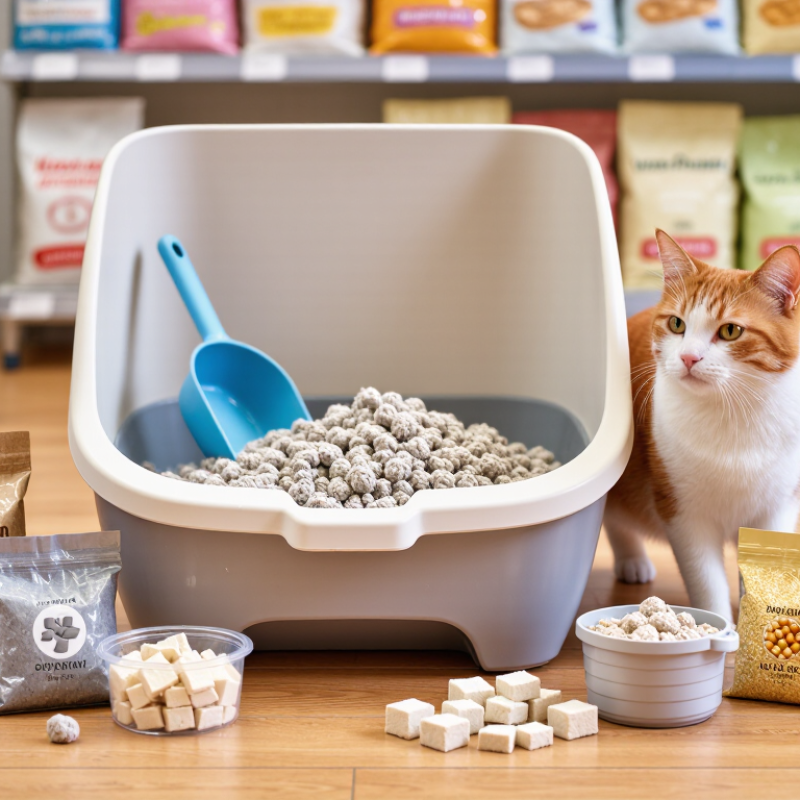
How to Choose Odour Lock Cat Litter for Wholesale?

Understanding Odour Lock Cat Litter and Its Key Features

Odour lock cat litter is designed to capture unpleasant smells after urine or feces enters the tray. Its performance depends on absorption, clumping speed, and airflow control. Common odour-control materials include activated carbon, zeolite, and baking soda. Each works differently. Some bind odour molecules, while others reduce moisture that feeds strong smells.

For wholesale buyers, granule structure deserves close attention. Fine particles may form tight clumps, but they can also create more dust. Larger granules usually track less, though they may absorb more slowly. A balanced product should clump firmly, release cleanly, and leave limited residue on the tray. In practical testing, pour one measured portion into identical trays. Add the same liquid volume, then check clump strength after ten minutes. Record dust, tracking, and remaining odour.

Packaging is another key feature. Moisture-resistant bags help preserve the litter during storage and transport. Clear batch information supports quality checks between shipments. Fragrance should be evaluated carefully. Strong perfume can mask odour, but some cats or households may reject it. Unscented formulas are not automatically better. Preferences vary. Wholesale testing should include different homes, tray types, and ventilation conditions. No odour-lock system is perfect. A realistic weakness may appear after several days of heavy use. That detail matters more than a polished product claim.

Identifying Wholesale Buyer Needs and Target Market Preferences

Wholesale selection begins with buyer reality, not a generic “premium” label. The American Pet Products Association’s 2023–2024 survey reports pets in 66% of U.S. households. This broad market still has sharply different litter needs. Urban buyers may prioritize compact bags and strong odour control. Multi-cat households often value rapid clumping and lower tracking. Wholesale buyers also need reliable supply, healthy margins, and clear product specifications.

Use market data as direction, not absolute truth. Grand View Research projects the global cat litter market to grow at a 4.8% compound annual rate from 2023 to 2030. That forecast supports investment, but regional testing remains essential. Ask distributors for sell-through by pack size, material, and price tier. A 10-liter bag may suit online shoppers, while smaller cartons can work better in convenience stores. Return reasons matter too. Dust, weak seals, and confusing usage instructions often reveal more than a polished survey.

Odour Lock Cat Litter should be tested after actual use, not only in a showroom. Compare odour performance after 24 and 72 hours. Record dust, clump strength, tracking, and moisture resistance. Request batch information and substantiated performance claims. Avoid impressive percentages without test evidence. Packaging should include barcodes, lot codes, pallet dimensions, and a dependable moisture barrier. I would not rely on one market forecast. Local trials can expose unexpected preferences, especially in humid warehouses or small apartments. Not every forecast survives real shelves.

How to Choose Odour Lock Cat Litter for Wholesale?

Wholesale Buyer Needs and Target Market Preferences

This planning index ranks the product attributes most relevant to wholesale selection on a 0–100 scale. Odour control, competitive pricing, and reliable clumping performance receive the highest priority because they directly affect retail sell-through, customer satisfaction, and repeat purchasing. Lower-dust formulas, manageable pack weight, recyclable packaging, and stable supply support broader market acceptance.

Comparing Odour Control, Absorption, Safety, and Material Types

How to Choose Odour Lock Cat Litter for Wholesale?

Wholesale buyers should compare odour control with absorption, not judge performance by fragrance alone. Grand View Research estimates the global cat litter market at about USD 10.5 billion in 2023, showing strong demand for functional products. Activated carbon, zeolite, or plant-based odour binders can reduce ammonia smells. However, a heavy perfume may only cover odour temporarily. Test litter in a ventilated room with equal waste volumes.

Absorption affects cleaning frequency, shipping weight, and customer satisfaction. Clumping clay usually absorbs quickly and forms firm scoops, while silica gel can hold moisture efficiently with lower daily replacement. Wood, tofu, and pea-based litter may offer lighter, renewable material options, but their clumps can vary between batches. Check dust levels, particle tracking, and moisture retention during a seven-day trial.

Small details matter.

Safety needs practical evidence. The U.S. Environmental Protection Agency stresses that indoor air quality depends on controlling airborne particles and ventilation. Ask suppliers for dust-testing results, ingredient declarations, and safety data sheets. The American Pet Products Association’s 2024 survey reports 49.6 million U.S. households own cats, so preferences will differ widely. Some cats reject scented litter. Some accept it surprisingly well. Wholesale selection should include unscented options and clear material labeling. I would not trust a “natural” claim without test records.

Evaluating Supplier Quality, Packaging, Pricing, and Minimum Orders

How to Choose Odour Lock Cat Litter for Wholesale?

Supplier quality should be verified beyond a polished sample. Ask for batch records, moisture results, dust-control data, and a current safety data sheet. Request independent testing for absorption and odour retention. A practical trial should use identical trays, measured waste, and a seven-day observation period. Smell performance varies between homes. Test it first. APPA reported that U.S. pet industry spending reached $147 billion in 2023, showing strong demand but also intense competition. Wholesale buyers cannot rely on claims alone. I would also check production consistency across three batches, because one excellent sample can hide uneven granule size.

Packaging affects both shelf appeal and landed cost. UNEP reported in 2023 that around 430 million tonnes of plastic are produced annually, with two-thirds becoming short-lived waste. Ask whether the bag uses recyclable material, reinforced seams, and moisture barriers. Confirm pallet dimensions before ordering. A cheaper package may split during container handling. It may also absorb humidity and weaken odour control. Pricing should include product, inner bags, cartons, freight, duties, inspection, and expected defects. Compare cost per usable kilogram, not only the quoted unit price.

Minimum order quantity deserves careful negotiation. Request a pilot order before accepting a full private-label run. Some suppliers separate production MOQ from packaging MOQ, which creates hidden inventory. Get written terms for lead time, replacement units, payment stages, and batch tolerances. Numbers can mislead. A low MOQ is not valuable if reordering takes ten weeks or quality complaints receive slow responses. I would leave a small budget for testing and damaged stock; that assumption is imperfect, but more realistic.

Selecting the Best Product for Storage, Distribution, and Resale Success

How to Choose Odour Lock Cat Litter for Wholesale?

Selecting the Best Product for Storage, Distribution, and Resale Success

Wholesale success begins with product stability, not only odor performance. The APPA 2024 State of the Industry report estimates that 66% of U.S. households own a pet. This supports steady demand for cat-care products, but retailers still reject damaged or poorly packed shipments. Start with the pallet. Moisture changes everything.

Choose litter with sealed inner packaging, strong cartons, and clear batch coding. Ask suppliers for humidity, leakage, dust, and odor-retention test results. A practical warehouse trial should include warm storage, pallet stacking, and repeated handling. Check whether granules remain dry after several weeks. Also inspect broken bags and carton compression. Small failures become expensive returns.

Grand View Research reported that the global cat litter market reached approximately USD 10.83 billion in 2023. Its forecast also indicates continued growth through 2030. That growth attracts more competitors and raises buyer expectations. For distribution, compare bag weight, pallet height, container utilization, and unloading time. Lightweight packaging may reduce freight costs, yet thin bags can tear easily. No formula is perfect. I would test seasonal humidity before committing to a large purchase. Resellers should also verify ingredient information, safety documentation, shelf-life guidance, and disposal instructions. Reliable records make product training easier and support more credible customer advice.

How to Choose Odour Lock Cat Litter for Wholesale? - Selecting the Best Product for Storage, Distribution, and Resale Success

Wholesale comparison framework for evaluating odor control, storage stability, distribution efficiency, and resale potential

Product Type Odour-Control Characteristics Moisture & Clumping Performance Dust & Tracking Considerations Storage and Distribution Profile Best Wholesale Positioning
Clumping bentonite litter Mineral granules form a tight clump around urine, helping contain odour when waste is removed regularly. Optional activated carbon or mineral additives may improve odour adsorption. Usually provides strong, fast clumping. Performance depends on granule size, sodium bentonite content, and the depth of litter in the tray. Fine particles can increase dust and tracking. Screened granules and larger particle sizes generally reduce, but do not eliminate, these issues. High bulk density increases freight cost per bag. Keep sealed and dry because moisture can cause premature clumping and hardening. Mainstream value, multi-cat households, supermarkets, and high-volume retail channels.
Silica gel crystal litter Porous silica crystals absorb liquid and help reduce moisture-related odour. Solid waste still needs to be removed promptly for effective odour control. Absorbs urine rather than forming traditional clumps. Users normally stir the crystals and replace the full tray when absorption capacity is reached. Generally low dust when crystals are well screened. Larger crystals may reduce tracking but can feel less comfortable to some cats. Lightweight relative to mineral litter and efficient for transport. Packaging must resist crushing and humidity exposure. Premium, low-maintenance, apartment, and convenience-focused product lines.
Tofu or soy-fibre clumping litter Plant-fibre pellets absorb liquid and can reduce odour through rapid moisture capture. Odour performance varies with pellet density and formula. Usually forms lightweight clumps that are easy to scoop. Some formulas dissolve more readily in water, but flushability must be verified locally and according to label instructions. Often produces less airborne mineral dust than clay. Pellets may track less than fine granules, although broken particles can still spread. Lower density can improve freight efficiency, but plant fibres are moisture-sensitive. Use moisture-barrier packaging and dry warehouse storage. Eco-conscious consumers, specialty retailers, and premium natural-product segments.
Wood-pellet litter Wood fibres can provide a natural scent and absorb moisture, but odour control is generally more dependent on frequent removal and tray maintenance. Pellets typically break down into sawdust when wet rather than forming hard clumps. A sifting tray can improve separation of dry and saturated material. Usually low in fine dust when pellets remain intact. Crumbled material may track around the tray. Compact and relatively stable when protected from humidity. Confirm wood source, treatment status, and applicable safety documentation. Budget-conscious, natural-lifestyle, and low-waste retail categories.
Corn or wheat-based clumping litter Plant starches and fibres absorb moisture and may help bind odour. Product performance can change if the litter becomes damp during storage. Often creates scoopable clumps with relatively low weight. Clump strength should be tested after standing for several minutes. Typically less mineral dust than clay, but lightweight particles may increase tracking. Granule shape is important for customer satisfaction. Requires dry, pest-controlled storage. Packaging should prevent humidity ingress and protect against crushing during pallet handling. Natural, renewable-material, and mid-to-premium product ranges.
Mixed-material odour-control litter Combines absorbent litter with materials such as activated carbon, zeolite, or baking soda. Each additive works differently, so claims should be supported by test results. Clumping and absorption depend on the primary base material. Check whether additives reduce clump strength or increase residue. Dust level is determined mainly by the base litter and screening process. Request particle-size and dust-test information before purchase. Formula complexity may increase quality-control requirements. Confirm batch consistency, ingredient documentation, and packaging durability. Odour-focused premium lines and multi-cat household products.

Wholesale Evaluation Checklist

Odour-control testing Request test conditions, test duration, sample size, and the method used to support odour-related claims.
Moisture protection Confirm sealed inner packaging, pallet wrapping, warehouse humidity controls, and shelf-life guidance.
Quality consistency Compare particle size, dust level, absorption, clump strength, odour performance, and colour across multiple batches.
Freight efficiency Calculate landed cost using net weight, carton dimensions, pallet quantity, container utilization, and damage rate.
Retail readiness Check clear usage instructions, disposal guidance, ingredient information, safety statements, barcode requirements, and local labelling rules.
Customer fit Match the product with the target segment: value, premium, natural, low-dust, lightweight, multi-cat, or convenience-focused buyers.

Note: Performance varies by formulation, granule size, packaging, storage conditions, tray design, and cleaning frequency. Validate all supplier specifications with independent samples before placing a wholesale order.

FAQS

How does odour-lock cat litter reduce unpleasant smells?

It absorbs moisture and traps odour molecules after urine or feces enter the tray. Common materials include activated carbon, zeolite, and baking soda. Each material works differently. No formula removes every smell.

Which granule size is better for wholesale buyers?

Fine granules can form tight clumps but may create more dust. Larger granules usually track less and absorb more slowly. A balanced formula should clump firmly and release cleanly. The best size depends on household preferences.

How can buyers test clumping performance?

Pour equal portions into identical trays. Add the same liquid volume to each tray. Check clump strength after ten minutes. Record residue, dust, and odour.

What packaging details should wholesalers inspect?

Moisture-resistant bags help protect litter during storage and transport. Clear batch information supports shipment comparisons. Barcodes and lot codes simplify inventory checks. Weak seals remain a practical problem.

Is unscented litter always the better choice?

Not automatically. Strong fragrance may mask odour but can upset some cats or households. Unscented products may suit sensitive homes. Preferences vary widely.

Which customer groups may need stronger odour control?

Urban households may prefer compact bags and strong odour control. Multi-cat homes often need fast clumping and low tracking. Small apartments can expose weaknesses quickly. Real homes matter more than showroom impressions.

How should odour performance be evaluated after purchase?

Compare trays after 24 and 72 hours. Test different homes, tray types, and ventilation conditions. Record dust, tracking, moisture, and remaining odour. Short tests can miss heavy-use problems.

What market information should wholesale buyers request?

Ask for sell-through by pack size, material, and price tier. Review return reasons, especially dust, weak seals, and unclear instructions. Request evidence for performance claims. Forecasts guide decisions, but they are not guarantees.

Conclusion

Choosing Odour Lock Cat Litter for wholesale requires a clear understanding of product performance, buyer expectations, and resale conditions. A suitable option should offer reliable odour control, strong liquid absorption, low dust, and safe ingredients that support a clean and comfortable environment for cats and their owners. Wholesalers should also consider material types, such as clay, plant-based, or silica-based litter, based on the preferences of their target markets, disposal requirements, and customer usage habits.

Supplier evaluation is equally important. Review product consistency, quality control, packaging strength, labeling clarity, pricing, lead times, and minimum order quantities before making a purchasing decision. The litter should be practical to store, protectable during transportation, and available in packaging sizes that suit retailers and end users. By balancing performance, safety, cost, supply reliability, and market demand, wholesalers can select an Odour Lock Cat Litter product that supports efficient distribution, customer satisfaction, and long-term resale success.

Evelyn

Evelyn

Evelyn is a skilled marketing professional with a strong understanding of the company’s products, customers, and evolving market needs. Through years of experience in product communication and content strategy, Evelyn transforms complex features and industry insights into clear, practical, and......