Choosing a Scented Bentonite Cat Litter supplier requires more than comparing fragrance names and quoted prices. The market is sizable, but estimates should be read carefully. Grand View Research valued the global cat litter market at about USD 5.8 billion in 2023 and projected continued growth through 2030. Its figure covers cat litter broadly, not scented bentonite products alone. That distinction matters. The American Pet Products Association’s 2025 State of the Industry report also estimated that 94 million U.S. households owned at least one pet in 2024, reflecting a large and varied customer base. These reports provide context, not proof that a particular supplier can deliver consistent quality.
A practical supplier review should examine the bentonite’s origin, granule consistency, moisture, absorption performance, and dust levels. Ask for current product specifications, safety documentation, and batch-level quality records. Then test samples in real conditions: pour the litter from a bag, note airborne dust, and check whether the scent remains noticeable without becoming overpowering. Packaging matters, too. A weak seal can let fragrance fade or moisture enter during storage. Request details on fragrance options, minimum order quantities, lead times, and how the supplier handles production changes. Small differences can be obvious in a retail pack. No checklist catches everything. A sample may perform well once and differently in another batch, so repeat testing is sensible. Claims such as “low dust” or “long-lasting scent” need measurable definitions. A dependable supplier should answer specific questions clearly and support claims with relevant records. That is a better starting point than a polished catalogue.
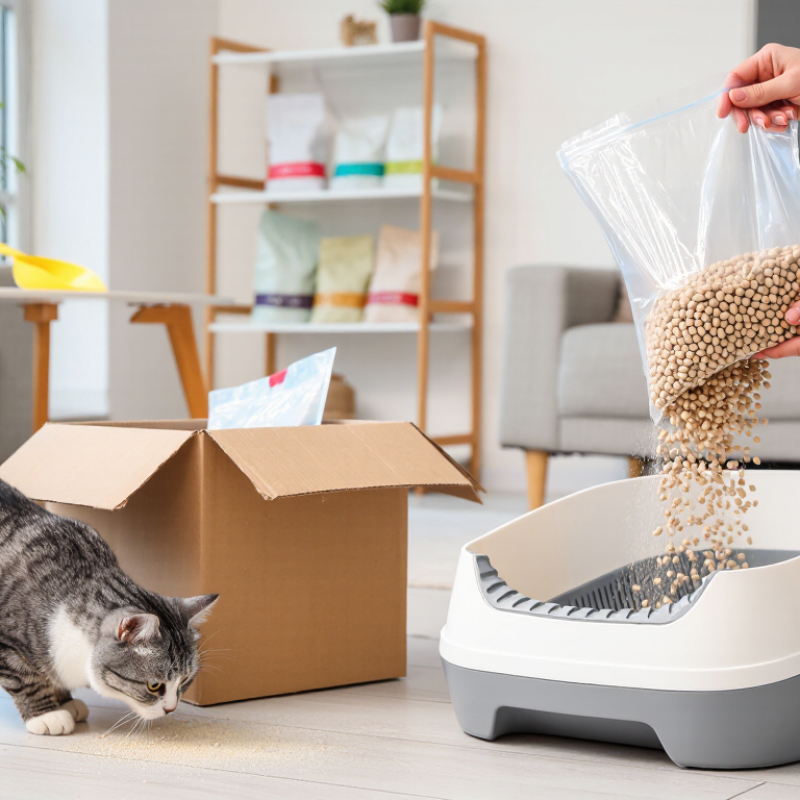
Before contacting suppliers, define what “pleasant” means for your customers. A light, clean scent may suit a small apartment, while stronger fragrance can overwhelm a covered litter box. Keep the target specific. Choose a scent profile, expected intensity, and whether the fragrance should fade over time. Request ingredient and safety documentation, along with clear storage and handling guidance.
Then set measurable requirements for the litter itself. Specify bentonite type, granule size, acceptable dust level, clumping speed, and ease of scooping. Test whether a damp clump stays intact after a short wait instead of relying only on a product sheet. Check the scented formula in both a ventilated room and a smaller enclosed space. Fragrance should not merely mask weak odor control. My first test may still be too simple.
Request samples and use the same tray, litter depth, and observation period for each supplier. Record scent strength on arrival and after several days, along with dust, tracking, and broken clumps. Set practical limits for batch variation, lead time, minimum order quantity, and packaging size. Ask how suppliers check consistency between production lots and which documents accompany shipments. A brief trial cannot represent every home. It can reveal mismatches early.
| Requirement | What to Define | Practical Buyer Specification | What to Verify with the Supplier |
|---|---|---|---|
| Bentonite type | Clay composition and litter format | Specify sodium bentonite, calcium bentonite, or a clearly described blend; choose clumping granules or another intended format. | Request a product specification and a representative sample. Confirm that the supplied product matches the stated clay type and format. |
| Granule size | Particle-size range and proportion of fines | Set a particle-size range suited to the intended use, and define an acceptable limit for very fine particles. | Ask for the sieve-analysis method and results for multiple production batches; compare the results with the agreed limits. |
| Clumping performance | Clump formation, strength, and ease of scooping | Define the expected clump behavior under your intended usage conditions rather than relying on a general “fast clumping” claim. | Test samples with a consistent liquid volume, waiting time, and scooping method. Agree on a repeatable acceptance test. |
| Dust level | Visible dust during pouring and handling | Set a dust-performance target appropriate for your product positioning and packaging method. | Request the supplier’s dust-test method and batch records. Assess a sample during pouring, scooping, and bag handling. |
| Fragrance profile | Scent type, strength, and consistency | Name the preferred scent family, such as floral, herbal, or clean, and specify whether the fragrance should be subtle or noticeable. | Evaluate samples before and after use. Check scent consistency across batches and ask how fragrance is incorporated into the litter. |
| Odor control | Performance with ordinary litter-box odors | Define the expected odor-control performance and the conditions under which it will be assessed. | Use a consistent evaluation period, litter depth, and cleaning schedule when comparing samples. Treat fragrance strength and odor control as separate criteria. |
| Fragrance and safety documentation | Ingredient information and applicable market requirements | Identify the destination market and request documentation relevant to the product and its fragrance ingredients. | Review available safety data and ingredient documentation. Confirm that labeling and product claims meet the rules applicable in the sales market. |
| Moisture and storage | Moisture specification and protection from humidity | Agree on a moisture limit and suitable storage conditions to help maintain product quality during transport and warehousing. | Request moisture-test results and packaging details. Inspect sealed samples after storage or transit where practical. |
| Packaging | Pack size, bag material, closure, and labeling | Choose the required net weight, packaging format, and label information for the intended sales channel. | Check bag strength, seal quality, handling instructions, batch identification, and the accuracy of the stated net weight. |
| Order quantity and lead time | Minimum order quantity and production schedule | Set an order volume that matches forecast demand, storage capacity, and the planned launch schedule. | Request written confirmation of minimum quantities, sample timing, production lead time, and shipment arrangements. |
| Quality consistency | Batch-to-batch control and complaint handling | Agree on measurable product specifications and a process for handling out-of-specification deliveries. | Ask for a certificate of analysis or equivalent batch record, retain an approved reference sample, and document the inspection and claims process. |
| Supplier assessment | Capability, communication, and reliability | Evaluate production capability, responsiveness, documentation, and ability to meet the agreed requirements. | Compare samples, specification sheets, quality records, and written commercial terms before approving a supplier. |
Choose a scent profile, intensity, and how quickly it should fade. Set clear limits for dust, granule size, and clumping. Keep it specific.
Test sealed samples, then use each litter in a ventilated room and a small enclosed space. Record the scent on arrival and after several days. A strong first smell can become too much.
Ask for clay origin, particle-size range, moisture level, and recent batch test results. Request the methods behind the measurements. Numbers need context.
Use identical trays, litter depth, and observation periods. Check whether a damp clump stays intact after a short wait. Scoop and note broken pieces.
Request current specifications, safety documents, and a certificate of analysis for each batch. Ask for acceptance limits and corrective-action records. Paperwork matters.
Ask how incoming clay, fragrance dosing, moisture, granule size, and dust are checked. Recent audit records can add context. A clean tour is not enough.
Each shipment should link to its production date, raw-material lot, and test record. Ask how quickly staff can retrieve a batch history. This can expose gaps.
No. Compare samples from several production batches, but treat home trials as an early screen. My first test was too simple; it missed some variation. Arrange a small production sample before a large order.
Choosing the right Scented Bentonite Cat Litter supplier starts with defining your needs, including the intended market, preferred fragrance, clumping performance, and packaging format. Assess the bentonite’s absorption, particle consistency, dust level, and odor control, then compare fragrance options and product specifications to ensure they suit your customers and use case.
Next, review each supplier’s manufacturing practices and quality controls, and compare pricing, minimum order quantities, packaging choices, and delivery terms. Request samples to evaluate scent strength, clumping, dust, and overall performance before making a commitment. Confirm that relevant product documentation and compliance information are available, and assess the supplier’s communication, production capacity, and track record for dependable delivery. A careful comparison of product quality, commercial terms, and supplier reliability can help you choose a consistent long-term partner.