Choosing a top Bentonite Cat Litter Manufacturer in China takes more than comparing prices. Buyers need evidence that the product performs consistently, from the first scoop to the last bag in a shipment. Demand is not abstract. The American Pet Products Association’s 2025 State of the Industry report estimated U.S. pet-industry spending at $152 billion in 2024. Its survey also counted about 49 million U.S. cat-owning households. These figures describe the broader pet market, not litter sales, but they show why dependable supply matters.
Start with the clay itself. Ask whether the bentonite is sodium-based or calcium-based, and request recent test results for moisture, clumping, absorption, and dust. Small details matter. A sample can look clean in a bright showroom yet create dust when poured into a litter box. Check how the manufacturer controls batch variation, seals bags, and records product lots. Request factory documentation, traceability details, and references from comparable buyers. Then test samples under your own handling and packaging conditions.
Price still counts, but a low quote may hide inconsistent granules, weak packaging, or uncertain lead times. Compare specifications, minimum order quantities, and delivery terms side by side. An independent laboratory report can support claims, though it does not replace a factory review or sample test. No checklist removes every risk. This guide outlines practical questions for assessing Chinese suppliers and choosing a partner whose product quality and communication hold up beyond the first order.
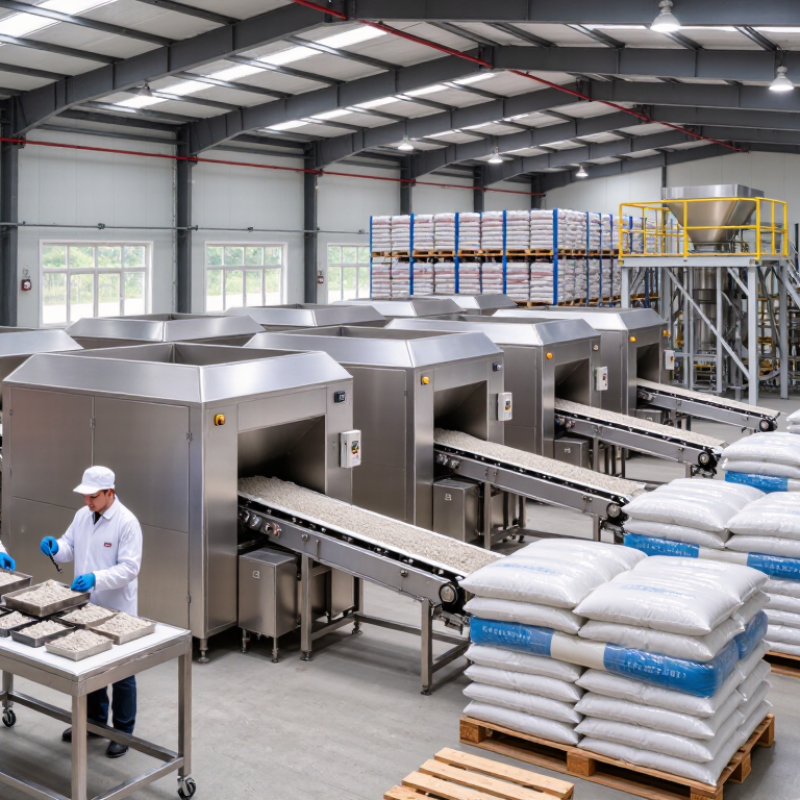
Bentonite cat litter is made from clay that can absorb liquid and form clumps. Its performance depends on the clay’s composition, particle size, and moisture level. At a manufacturing site, raw clay is typically dried, crushed, granulated, and screened. Dust may be removed before the litter is packed. Each stage affects how quickly granules absorb liquid and how firmly clumps hold together.
Details matter. A reliable manufacturer should explain where its raw material comes from and how it checks each production batch. Ask for particle-size ranges, moisture results, and test methods for absorbency and clump strength. A sample can also reveal practical differences: pour it into a clean tray, note the dust, and check whether wet clumps lift without breaking apart. One test is not enough. Results can vary with tray depth and household conditions, and even a tidy sample may not reflect every batch. That is worth remembering.
Look for consistent granules, clear packaging information, and documented quality checks. Ask how the factory handles changes in clay supply or production settings. A careful answer is more useful than a broad promise. Manufacturers should be willing to discuss limitations, too. Strong clumping may come with heavier granules, while finer material can create more dust. No single specification tells the whole story.
Choosing a Chinese bentonite cat litter manufacturer starts with raw-material control, not a polished catalogue. Ask where the clay is mined, how batches are tracked, and whether the supplier can share recent test records. The USGS Mineral Commodity Summaries 2024 estimates China mined about 4.0 million metric tons of bentonite in 2023. That figure shows substantial supply; it does not prove any factory’s litter is consistent. Scale matters, but it proves little. Request batch-level results for moisture, particle size, swelling performance, and dust, then compare them with your own product specifications.
Assess the factory’s process on site or through a qualified independent audit. Look for covered storage, calibrated weighing equipment, and clear separation between product grades. Ask for repeat samples from different production dates, not just one carefully prepared bag. A sample can flatter a product. It may not reflect routine output. Check packaging strength, pallet protection, lead times, and the process for handling complaints or failed tests. Confirm that certificates are current and apply to the actual production site and product. No checklist is perfect. Record agreed test methods and acceptance limits in the purchase contract, because “low dust” or “fast clumping” can mean different things to different buyers.
| Evaluation dimension | What to verify | Useful evidence or evaluation method | Why it matters |
|---|---|---|---|
| Raw material and mineral consistency | Ask whether the litter is made from sodium bentonite, calcium bentonite, or a blended material, and how incoming mineral lots are checked. | Request a current product specification, batch-level test records, and samples from more than one production lot. Compare clumping and absorption under the same test conditions. | Mineral properties and processing can affect clumping, absorption, and consistency between shipments. |
| Granule size and particle distribution | Confirm the offered particle-size range and whether the supplier controls oversize and fine particles. | Review the sieve-analysis method and results against the buyer’s agreed size specification; check a representative sample for consistency. | Particle size influences texture, dust generation, tracking, and the way litter performs in a tray. |
| Moisture and storage stability | Check the moisture limit in the product specification and how finished goods are protected from moisture during storage and transport. | Ask for the test method, recorded batch results, packaging details, and storage recommendations. Agree an acceptance limit before placing an order. | Moisture variation can affect handling, product condition, and consistency at delivery. |
| Clumping and absorption performance | Evaluate clump formation, clump strength, absorption, and ease of removal using a repeatable procedure. | Test samples using the same liquid volume, contact time, litter depth, and evaluation method; record results and compare them with your target product. | A consistent test makes supplier samples more comparable than subjective descriptions alone. |
| Dust control | Clarify what the supplier means by “low dust” and whether dust is measured or assessed using a defined procedure. | Request the test procedure and results, then inspect samples during pouring and scooping under consistent conditions. Include a dust limit in the purchase specification if required. | Dust levels affect user experience and can vary with particle size, handling, and transport. |
| Additives, fragrance, and product claims | Identify any fragrance, deodorizing agent, colorant, or other additive, and distinguish additive claims from the properties of the mineral itself. | Request a written ingredient or additive declaration and supporting documentation for claims made on the product or packaging. | Clear disclosure helps buyers assess product suitability and prepare accurate labeling. |
| Quality management and traceability | Check whether production lots can be traced and whether inspection records are retained for raw materials and finished goods. | Review the quality-control process, sample inspection records, lot coding, complaint handling, and corrective-action procedure. Verify certificates directly with their issuer where applicable. | Traceability supports investigation and resolution if a shipment does not meet the agreed specification. |
| Production capacity and order planning | Confirm available production capacity, order lead time, peak-season planning, and the ability to maintain the approved specification at scale. | Ask for a written production schedule, expected monthly output for the required product, and a plan for pre-shipment inspection or sample approval. | A successful sample does not by itself establish that a supplier can deliver repeat orders on schedule. |
| Packaging and shipment protection | Specify bag material, net weight, sealing, pallet configuration, and protection against moisture or damage in transit. | Approve a packaging sample or artwork proof; confirm that weight, labeling, and packing details match the purchase order and destination-market requirements. | Packaging affects product condition, handling, freight planning, and retail readiness. |
| Export documentation and delivery terms | Confirm the supplier can prepare the documents required for the agreed shipment and understands the selected delivery terms. | Agree responsibility for commercial invoices, packing lists, shipping documents, and any destination-specific documents before order confirmation. Have an experienced freight or customs professional verify local requirements. | Document requirements and import rules depend on the destination and shipment arrangement. |
| Sample approval and ongoing monitoring | Establish how the approved sample, specification, and production batches will be compared over time. | Keep a signed specification and reference sample; define inspection timing, test criteria, acceptance limits, and the process for handling nonconforming goods. | Written acceptance criteria reduce ambiguity between sample approval and repeat production. |
Note: Performance limits should be agreed in the purchase specification and verified using consistent test methods; there is no single universal specification for all bentonite cat litter products.
Evaluating quality starts with repeatable checks, not a polished sample. Ask for current specifications covering granule size, moisture, clumping performance, and dust levels. Then compare samples from separate production batches. A firm clump should hold during scooping, while excess fine powder can create mess around the tray. Small details matter. Test the litter in the same tray, with the same liquid amount and waiting time. Record what you observe. A quick hand test is useful, but it cannot replace documented measurements.
Safety deserves equal attention. Request recent test reports and clear information about the testing methods and sample dates. Ask how incoming bentonite is inspected and how potential mineral contaminants are monitored. Packaging should arrive dry and sealed, without a strong unusual odor. A clean-looking sample proves little by itself. Review how the manufacturer tracks batches and handles quality complaints; specific records are more reassuring than broad promises. Consistency also depends on production controls, so ask whether particle size and moisture are checked routinely, not only before a shipment. There is a trade-off: a very fine texture may feel soft, yet produce more dust. No sample answers every question, and even experienced buyers can miss differences when they test only once.
How to Choose a Top Bentonite Cat Litter Manufacturer in China
Factory capacity should be proven with records, not impressive machinery alone. Grand View Research estimated the global cat litter market at USD 5.13 billion in 2023, with projected growth through 2030. That demand makes reliable output important, but market growth does not prove any factory can meet your order. Ask for monthly production figures, recent order schedules, and a live walkthrough of drying, milling, screening, and packing. Check whether workers can trace a batch from raw bentonite to sealed bags. Small details matter: granule size, moisture, dust, and bag weight.
Verify certificates with the issuing body. Check the factory name, site address, expiry date, and whether the certified scope covers the relevant production process. A certificate alone is not a product test. Request recent test reports and compare their methods and results with your specifications. The U.S. Geological Survey’s Mineral Commodity Summaries reported U.S. bentonite production of about 4.6 million metric tons in 2023, reflecting the mineral’s broad industrial supply base. Cat litter quality still depends on processing and consistent raw material.
Export experience needs evidence too. Ask for redacted shipping documents, destination-market examples, packaging specifications, and records of handling claims or delays. Check whether the factory can explain container loading and moisture protection clearly. Paper is not proof. I would treat even a polished audit cautiously: one visit may miss seasonal bottlenecks, and published market figures cannot verify a supplier’s actual performance.
A low factory price can become expensive after ocean freight, port charges, and inland delivery. Compare quotations on the same basis, such as FOB or CIF, and request a landed-cost estimate for your destination. Check what each price includes: bag weight, palletization, moisture control, and export documents. Ask for recent test results covering particle size, dust, absorbency, and clumping. A sample should match the quoted specification, not just look similar. Small differences matter.
Logistics and supplier support deserve equal attention. The World Bank’s 2023 Logistics Performance Index scored China 3.7 out of 5, using measures that include customs, infrastructure, tracking, and timeliness. That country-level figure cannot predict one supplier’s performance, but it highlights why shipment visibility and contingency plans matter. Ask for realistic lead times, loading photos, and a named contact for delays or quality claims. A polished quotation is not proof of dependable service; response quality should be checked before an order. Comparing suppliers is imperfect, too: a cheaper offer may still win if quality varies less.
Tips: Request a small trial order and compare the delivered cost per usable kilogram. Confirm payment milestones, replacement terms, and how quickly the supplier answers technical questions. Keep the comparison sheet simple, but leave room for one uncomfortable question: what happens when a shipment arrives late?
A practical comparison of pricing, logistics, and supplier support
The scores below are an illustrative 1–10 evaluation framework, not ratings of specific companies. Compare landed cost, delivery reliability, communication, and quality documentation using your own quotations, shipping records, and supplier responses.
It is made from absorbent clay. When wet, the granules can form clumps.
Raw clay is dried, crushed, granulated, and screened. Dust may be removed before packing.
Ask for particle-size ranges, moisture results, absorbency tests, and clump-strength records. Get the test methods, too.
Pour it into a clean tray. Watch for dust, then see whether wet clumps lift intact.
No. Samples can differ from routine batches. Tray depth and household conditions also affect results.
Look for covered clay storage, calibrated scales, and clear separation between product grades. Ask how batches are tracked.
No. China’s substantial bentonite supply does not confirm any factory’s batch quality. Scale proves little.
Record test methods and acceptance limits for moisture, particle size, swelling, and dust. “Low dust” is vague.
Strong clumping may mean heavier granules, while finer material can create more dust. There is no perfect specification.
Choosing a reliable Bentonite Cat Litter Manufacturer in China begins with understanding how bentonite is processed into litter and which product features matter for your market. Compare manufacturers based on raw material quality, production methods, and their ability to deliver litter with consistent absorbency, clumping performance, particle size, and dust levels. Ask for product samples and clear quality information so you can assess suitability and safety before making a larger commitment.
You should also verify the factory’s production capacity, relevant certifications, and experience handling export orders. Compare quotations alongside packaging options, shipping arrangements, lead times, and the support available for communication and after-sales questions. A dependable supplier should be transparent about its capabilities and able to meet your quality and delivery requirements consistently. Considering these factors together can help you select a manufacturer that offers a practical balance of product performance, cost, and long-term supply reliability.