Kurtuluş, Sami Yücel Cd. No:44/2, Fatsa / Ordu – Türkiye +90 (452) 716 52 52 [email protected]
0%

Choosing the 2026 Best Private Label Cat Litter Suppliers requires more than comparing prices and packaging designs. Retailers must examine material quality, dust control, odor performance, moisture absorption, and production consistency. A supplier may offer attractive branding, yet inconsistent granules can frustrate cats and their owners.

Veterinarian and cat-litter specialist Dr. Bruce Elsey has stated, “Cats are not like dogs. Cats have very specific needs.” That principle remains highly relevant to Private Label Cat Litter. A successful product should feel comfortable under sensitive paws, form reliable clumps, and remain acceptable in a familiar litter box. Small details matter. Grain size matters. Scent strength matters.

This guide evaluates suppliers through an experienced buyer’s lens. It considers factory capabilities, testing practices, minimum order quantities, packaging flexibility, certifications, and communication standards. It also looks beyond polished websites. A supplier’s response to a damaged shipment can reveal more than a sales presentation.

No supplier is perfect. Some manufacturers excel at bentonite but struggle with plant-based formulas. Others provide excellent customization but require larger opening orders. That trade-off deserves honest attention. Buyers should request samples, compare batch performance, and test products with real cats before making a long-term commitment.

The strongest partners support dependable quality, transparent documentation, and practical market positioning. They understand that cat owners notice dust on dark furniture, tracking across floors, and lingering odor. In 2026, the best Private Label Cat Litter suppliers will not simply manufacture bags. They will help brands create products that cats accept and households trust.
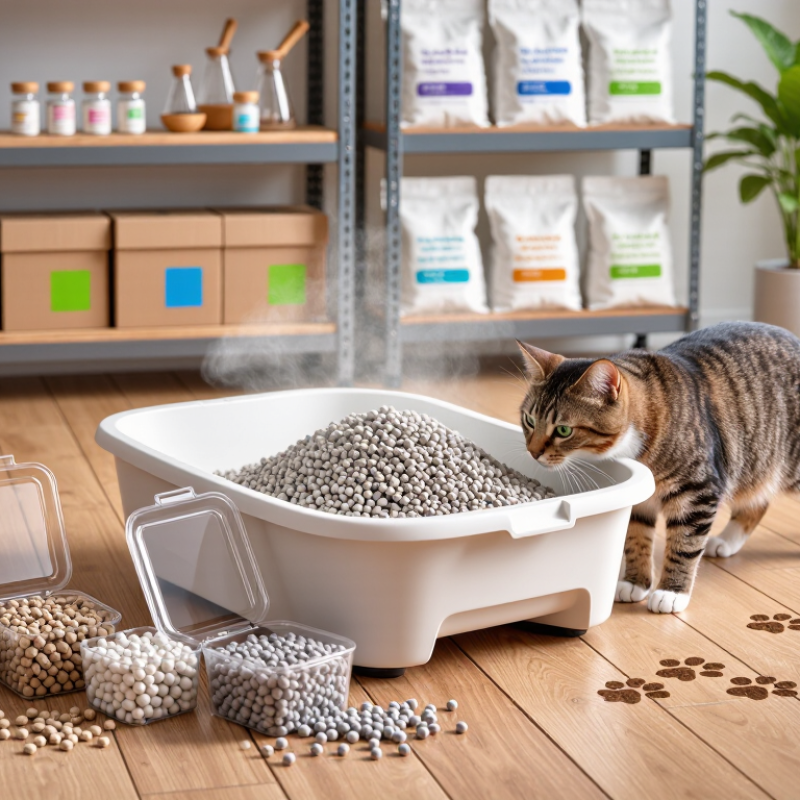
2026 Best Private Label Cat Litter Suppliers?

What Is Private Label Cat Litter and How Does It Work?

What Is Private Label Cat Litter and How Does It Work?

Private label cat litter is made by a supplier but sold under your own label. The supplier develops, blends, fills, and packs the litter for your business. Common materials include clay, tofu, wood, paper, and silica-based granules. Each option has different strengths. Clay may offer strong clumping, while tofu litter can feel lighter and easier to handle.

The process usually starts with a product brief. You choose the litter type, particle size, scent level, package weight, and design. The supplier then provides samples for testing. Check dust after pouring, clumping after ten minutes, odor control overnight, and tracking near the box. A first sample may look right and still perform poorly. That happens more often than buyers expect.

Reliable sourcing requires more than attractive packaging. Ask for ingredient details, batch records, moisture data, and quality testing procedures. Confirm the minimum order quantity, lead time, storage needs, and shipping protection. Bags can split when stacked badly. Boxes can absorb moisture in transit. Product consistency also matters; the second shipment should behave like the first. I would keep a retained sample from every approved batch. It is a simple step, but many new buyers forget it. Supplier communication, documented inspections, and real home trials help turn a private label idea into a dependable retail product.

2026 Best Private Label Cat Litter Suppliers: How Private Label Cat Litter Works

Private label cat litter is manufactured by a third-party supplier and sold under a retailer’s own brand. The retailer usually selects the litter material, formula, packaging, order quantity, and quality requirements, while the supplier manages production, testing, packing, and shipment.

The chart shows typical planning time for the main stages of a private label cat litter project. The figures are practical industry estimates and can change according to formula complexity, packaging requirements, testing needs, order volume, and shipping distance. When comparing suppliers in 2026, buyers should evaluate material consistency, clumping or odor-control performance, packaging capability, quality documentation, minimum order quantity, and delivery reliability—not price alone.

Key Factors for Evaluating Cat Litter Suppliers in 2026

2026 Best Private Label Cat Litter Suppliers?

Key Factors for Evaluating Cat Litter Suppliers in 2026

Choosing a private label cat litter supplier requires more than comparing prices. Material consistency should remain stable across every production batch. Ask for samples from different manufacturing dates. Check clumping speed, odor control, dust levels, and granule size. A litter box tells the truth quickly.

Reliable suppliers should provide clear test reports and traceable raw material records. Look for documented quality controls, factory audits, and secure packaging procedures. Packaging must resist moisture during storage and ocean transport. Small details matter, including sealed inner bags, readable labels, and accurate weight statements. I would also verify whether the supplier can handle recyclable or reduced-plastic packaging without weakening protection.

Order quantities, lead times, and production flexibility deserve careful attention. A low minimum order can help new sellers test demand. However, unusually low pricing may hide weaker materials or inconsistent inspection. Request a written specification before signing anything. Include limits for dust, moisture, clump strength, and damaged cartons. Independent testing can support your decision, especially when supplier reports seem too general.

A factory visit is useful, but it is not perfect evidence. Clean offices can distract from production problems. Review recent batch records and speak with existing customers when possible. I have found that communication speed often predicts future service quality. Still, fast replies cannot replace dependable results. Leave room for doubt, test again, and avoid choosing a supplier based on one impressive sample.

2026 Best Private Label Cat Litter Suppliers? - Key Factors for Evaluating Cat Litter Suppliers in 2026

Evaluation Dimension What to Evaluate Practical 2026 Benchmark or Target Recommended Verification Suggested Weight
Material and Formula Clumping clay, silica gel, recycled paper, wood, tofu, corn, or blended formulas; ingredient consistency and contamination control. Formula should match the intended positioning, comply with destination-market requirements, and remain consistent across production batches. Review full ingredient specifications, safety data, allergen statements, raw-material certificates, and three or more retained batch samples. 12%
Absorption and Clumping Liquid absorption speed, clump strength, clump size, bottom-stick resistance, and ease of scooping. Use a repeatable laboratory or in-house test method; compare absorption capacity, clump integrity, and scoopability against the agreed product specification. Request independent test results and conduct blind tests using identical liquid volume, waiting time, litter depth, and scoop method. 14%
Odor Control Odor reduction technology, fragrance level, ammonia management, and suitability for fragrance-sensitive households. Odor-control claims should be supported by a defined test protocol rather than unsupported marketing language; offer both unscented and scented options where relevant. Check laboratory methodology, fragrance disclosure, consumer panel results, and performance after repeated use. 10%
Dust Performance Visible dust during pouring, scooping, and disposal; particle-size consistency; dust-control treatment. Set a measurable internal dust specification and reject batches that show excessive visible dust or inconsistent granule size. Request dust-test data, inspect production samples, and perform a controlled pour test from a fixed height. 10%
Tracking and Granule Quality Granule shape, particle-size distribution, paw tracking, breakage, fines, and suitability for different cat breeds. Granule size and shape should remain within an agreed tolerance, with low breakage after transport and handling. Review sieve-analysis results and conduct home-use trials on hard floors, mats, and carpeted surfaces. 7%
Quality Management Incoming-material inspection, batch traceability, process controls, corrective actions, and complaint handling. Supplier should maintain documented quality procedures, batch coding, retained samples, and a formal nonconformance process. Audit the facility or review a recent third-party audit, quality manual, inspection records, and corrective-action reports. 12%
Certifications and Compliance Applicable product safety, chemical, packaging, labor, environmental, and import requirements in each target market. Documentation must match the actual factory, product formula, packaging materials, and destination-country regulations. Verify certificate scope, issuing body, validity dates, test reports, SDS documents, and country-specific declarations. 10%
Private Label Capability Custom formula development, packaging formats, artwork support, barcode application, language requirements, and product variations. Supplier should provide clear approval stages for artwork, samples, packaging proofs, formula changes, and final production release. Request a complete sample-to-production workflow, packaging dielines, print proofs, and written change-control procedures. 8%
Minimum Order Quantity and Scalability Minimum order quantity, minimum packaging run, pilot-order flexibility, monthly capacity, and ability to support demand growth. The minimum order should fit the launch budget while the factory maintains documented capacity for forecasted scale-up. Obtain a written quotation showing minimums by formula, pack size, packaging type, and production location. 6%
Lead Time and Supply Reliability Sample lead time, packaging procurement time, production schedule, port options, seasonal capacity, and contingency planning. Supplier should provide separate timelines for sampling, artwork approval, packaging production, manufacturing, inspection, and shipment. Review historical on-time-delivery records, production calendars, backup-material plans, and escalation contacts. 6%
Packaging and Sustainability Moisture protection, seal strength, pallet efficiency, transport durability, recyclability, and packaging material reduction. Packaging should protect product quality throughout transport and use materials that comply with the target market’s packaging rules. Conduct drop and compression checks, review packaging specifications, and request evidence for recycled or recyclable content claims. 3%
Total Cost and Commercial Terms Product price, packaging, tooling, testing, inland transport, freight, duties, payment terms, and warranty or claim provisions. Compare total landed cost rather than factory price alone, using identical Incoterms, pack weights, shipment quantities, and destination assumptions. Request a line-item quotation and calculate landed cost under at least two order volumes and freight scenarios. 2%
Total Evaluation Weight 100%

Note: The benchmarks above are buyer-side evaluation targets and verification guidelines. Final requirements should be confirmed against the destination market, product formula, packaging format, and applicable regulations.

Top Private Label Cat Litter Suppliers for Different Business Needs

2026 Best Private Label Cat Litter Suppliers?

Top Private Label Cat Litter Suppliers for Different Business Needs

The global cat litter market is expanding steadily. Grand View Research estimated its 2023 value at about $10.8 billion, with continued growth through 2030. APPA’s 2023–2024 report also estimated 46.5 million U.S. households owned cats. These figures show strong demand, but buyers still need suppliers matched to their sales channels.

For supermarkets, regional manufacturers may offer flexible minimum order quantities and shorter delivery routes. Online sellers often need lightweight clumping litter, strong packaging, and reliable fulfillment support. Premium retailers may prefer tofu, wood, or low-dust mineral formulas with clear ingredient records. Sustainability-focused businesses should request recycled packaging data and manufacturing waste targets.

Ask for batch samples, moisture results, odor-control testing, and recent certificates. ISO 9001 systems can indicate process discipline, but certification alone proves little. A clean bag is not proof of clean production. Request a factory audit, safety data sheets, and traceable lot numbers. The Global Pet Industry Association’s market reports also highlight rising interest in convenience and environmentally responsible products.

I would not choose the cheapest quote. That shortcut often fails. Compare delivered cost, breakage rates, fill weight, complaint handling, and reorder speed. Some suppliers promise custom formulas too quickly. Allow time for pilot testing with real cats, because laboratory performance may not match household behavior. Supplier selection should remain practical, evidence-based, and open to revision.

Cat Litter Products, Materials, Packaging, and Customization Options

Choosing the best private label cat litter supplier in 2026 requires more than comparing prices. According to the American Pet Products Association’s 2024 report, about 49.6 million U.S. households owned cats. Demand is broad, but buyers increasingly inspect dust control, odor performance, and material transparency.

Suppliers should offer several product options, including bentonite clay, silica gel, tofu, corn, pea fiber, and wood pellets. Grand View Research projects the global cat litter market to grow at approximately 4.8% annually through 2030. This growth supports private label opportunities, especially for clumping, fragrance-free, low-dust, and biodegradable formulas. Ask for batch testing, moisture data, safety documentation, and realistic absorbency claims. Marketing language can sound impressive. Laboratory results matter more.

Packaging should match the product and shipping route. Common choices include kraft paper bags, woven polypropylene sacks, recycled plastic pouches, and resealable zipper packs. A moisture barrier is essential for plant-based litter. Customization may include pellet size, scent level, color, carton printing, private artwork, and pallet configuration. Smaller trial orders can reduce risk, although they often increase unit costs. I would not trust a supplier offering every feature immediately. Product stability, packaging durability, and consistent raw materials need repeated testing. One weak batch can damage customer trust quickly.

How to Choose and Partner With the Right Supplier Successfully

2026 Best Private Label Cat Litter Suppliers?

Choosing a private label cat litter supplier requires more than comparing prices. The right partner should understand particle size, dust control, absorbency, odor management, and packaging stability. Ask for current product specifications, safety documents, and batch testing records. Request samples from different production dates.

Consistency matters.

Test each sample in realistic homes, not only in a clean laboratory. Check tracking, clumping strength, odor retention, dust near the litter box, and how easily waste can be removed. Record results with clear measurements. Small details matter.

A supplier should also explain mineral or plant material sourcing, factory quality controls, lead times, minimum order quantities, and complaint procedures. Reliable partners provide traceable batch numbers and respond with evidence, not vague promises.

Review the draft packaging carefully. Product claims must be accurate, readable, and suitable for the markets where you sell. Avoid unsupported words such as “100% dust-free” unless testing genuinely proves them.

A factory audit can reveal storage problems, weak sealing equipment, or rushed cleaning routines. No evaluation is perfect. A supplier may perform well during one visit and disappoint later. Build quality checks into the contract, including inspection rights, replacement terms, and notice periods for formula changes. Price still matters, but an unusually low quote may hide weaker materials or unstable service. Partnership improves when both sides share forecasts, report defects quickly, and accept occasional uncomfortable feedback.

FAQS

What should I compare when evaluating cat litter suppliers?

Compare material consistency, clumping speed, odor control, dust levels, and granule size. Price alone can mislead. Test several batches.

Which cat litter materials should a supplier offer?

Common choices include clay, silica gel, tofu, corn, pea fiber, and wood pellets. Each material needs separate absorbency and dust testing.

How can I check product consistency?

Request samples from different production dates. Test tracking, clump strength, moisture, odor retention, and waste removal. Record every result.

What documents should a reliable supplier provide?

Ask for product specifications, safety documents, batch records, raw material records, and test reports. Vague paperwork deserves another question.

How should I evaluate cat litter packaging?

Check sealed inner bags, readable labels, accurate weights, and moisture resistance. Packaging must survive storage and ocean transport. Weak seals fail quietly.

Are factory visits enough to confirm supplier quality?

No. A clean office proves little. Review recent batch records, storage areas, sealing equipment, and production routines.

How do minimum order quantities and lead times affect supplier selection?

Smaller trial orders reduce demand risk but may increase unit costs. Confirm lead times, production flexibility, and written order conditions.

What protections should a supplier contract include?

Include dust, moisture, clump-strength, and carton-damage limits. Add inspection rights, replacement terms, and notice periods for formula changes.

How can I judge a supplier’s communication quality?

Fast replies help, but evidence matters more. Ask for clear answers, complaint procedures, and traceable batch numbers. My judgment can still be wrong.

Conclusion

This guide explains how Private Label Cat Litter enables businesses to sell cat litter under their own brand by working with a qualified manufacturer on product development, packaging, and quality standards. It explores the main factors to evaluate in 2026, including material safety, odor control, clumping performance, production consistency, minimum order quantities, pricing, certifications, quality inspection, and supply reliability. These considerations help retailers, distributors, online sellers, and emerging pet-care businesses identify suppliers that match their goals and customer expectations.

The article also compares supplier options for different business needs and reviews common litter materials, product formats, package sizes, labeling methods, and customization possibilities. Finally, it outlines a practical partnership process, from requesting samples and confirming specifications to reviewing agreements, testing products, planning inventory, and maintaining clear communication. With careful research and a well-defined product strategy, businesses can build a dependable Private Label Cat Litter line that offers value, consistent quality, and a distinctive market position.


Evelyn

Evelyn

Evelyn is a skilled marketing professional with a strong understanding of the company’s products, customers, and evolving market needs. Through years of experience in product communication and content strategy, Evelyn transforms complex features and industry insights into clear, practical, and......